Authored by Mollie Engelhart via The Epoch Times,
California was my home for most of my adult life—long enough to know that what looks good in a campaign slogan can feel very different when you’re the one carrying the load.
I built restaurants there. I employed people there. I signed permits, licenses, and applications like they were holiday cards. I navigated agencies that asked for more paperwork than profit statements. I paid into a system that always wanted one more filing, one more inspection, one more approval, one more fee. The joke was that my assistant didn’t work in hospitality—she worked in compliance. And it was true. That state turns compliance into a profession.
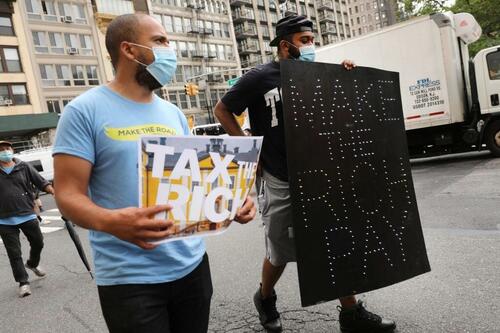
So when I see the latest proposal—a one-time 5 percent tax on anyone whose net worth exceeds $1 billion—I don’t see Robin Hood. I see Sacramento writing itself a permission slip.

The pitch says “billionaires.” But the mechanism says “total assessed wealth, declared by the owner, verified by the state, and enforceable through audit.”
That’s a power move, not a nuance.
A Tax Based on Valuation, Not Reality
Most taxes in America hit earnings or consumption. You pay when you make money, or when you buy something, or when you sell something. This proposal taxes accumulation. It doesn’t ask what you can afford. It asks what you have, and then hands a calculator to the agencies to determine the bill.
We’ve seen how this evolves. The Biden administration and Vice President Kamala Harris already proposed a federal wealth tax on Americans worth $100 million or more. Not billionaires—$100 million. That’s a signal flare, not a footnote.
It tells you exactly what you need to know: This idea isn’t anchored at the top. It’s already drifting toward the middle.
And middle is where most of the money actually lives.
The Constitution Saw This Coming
There’s a phrase from constitutional law that gets thrown around a lot in conversations like this: bill of attainder.
A bill of attainder is a law that punishes a specific person or small identifiable group without a trial, skipping the courts and due process entirely. In the United States, that kind of law is unconstitutional—lawmakers don’t get to play judge and jury and penalize a select group through legislation alone.
This proposal isn’t a criminal punishment, but the reason people bring the term up at all is because it targets a tiny group by valuation for a massive extraction event without a court proceeding first. That resemblance matters if you believe fairness isn’t optional.
The Wealthy Already Pay Plenty—Just Quietly
People talk about the “rich dodging taxes” like it’s gospel. Let me tell you what actually happens when you build something in California:
You don’t dodge taxes, you drown in them. Not just income tax, not just property tax, but sales tax, alcoholic beverage tax, payroll taxes, employer-side filings, permits, licensing fees, inspections, regulatory approvals, environmental health certificates, building permits, land use permits, and on and on and on.
That state has already been collecting revenue from business owners in every direction long before this proposal ever landed on the ballot.
If you want to know why business owners left, it wasn’t a lack of patriotism. It was math.
The Trojan Horse Isn’t the Billionaire—It’s the Precedent
The billionaires are the branding. The mascot. The costume the idea wears so voters don’t inspect the gears.
But the gears are what matter, because once a state passes a tax on total assessed wealth, future thresholds can be lowered, exemptions can be rewritten, valuation formulas can be expanded, and enforcement will land in the hands of agencies most voters will never meet—but business owners never stop meeting.
The real question is not “Should billionaires pay more?” but “Should the state have the right to tax total assessed wealth at all?”
Because once that precedent exists, the definition of “rich” will keep shifting, the net will keep widening, and the bill will keep climbing down the balance sheet toward the people who never imagined they’d qualify.
A millionaire today in California is someone who owns a house. A house today costs a million dollars there. That’s not a billionaire. That’s a math teacher and a firefighter and a family with a mortgage.
The net will widen because the money they need is not all at the top. There’s much more sitting in the middle.
And middle-class is where precedent always ends up grazing.
My Stance
I lean libertarian—I don’t want government in every aspect of our lives, our kitchens, our land, or our asset valuations. I’m a hard no on expanding its discretion any further. The slogans may be sticky, but freedoms are stickier—once lost, they don’t come back.
Views expressed in this article are opinions of the author and do not necessarily reflect the views of The Epoch Times or ZeroHedge.
Loading recommendations...