Authored by Tom Ozimek via The Epoch Times,
President Donald Trump on Dec. 7 urged the Supreme Court to uphold his tariff program, saying a ruling against his use of emergency economic powers would weaken national security, while also saying there are alternative legal tools to keep the duties in place.

Trump said in a Dec. 7 post on Truth Social that the tariff regime currently before the Supreme Court is “far more direct, less cumbersome, and much faster” than other methods available under U.S. law.
“Speed, power, and certainty are, at all times, important factors in getting the job done in a lasting and victorious manner,” he wrote. “I have settled 8 Wars in 10 months because of the rights clearly given to the President of the United States.”
Trump noted “other methods of charging tariffs” exist but said that the approach challenged in the courts delivers a “strong and decisive national security result,” adding that “if countries didn’t think these rights existed, they would have said so, loud and clear!”
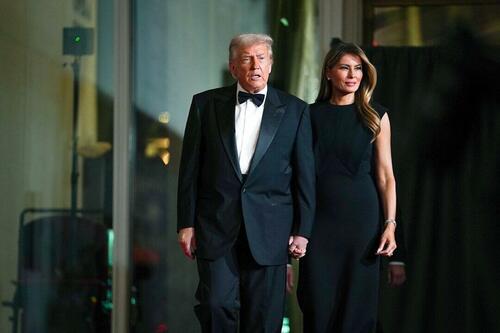
Speaking to reporters later that evening at the Kennedy Center in Washington, Trump again said that the case goes beyond trade policy.
“We have tremendous flexibility with the current system. It’s unbelievable for national security. I’ve ended eight wars largely because of trade, because of tariffs,” he said. “If we go the other tariff route—and there are other routes we can go—but it won’t give you the same pure national security as this one. This one is swift and very powerful.”
The Supreme Court heard arguments last month on whether Trump exceeded his authority under the International Emergency Economic Powers Act (IEEPA), a 1977 law that allows presidents to regulate imports after declaring a national emergency. A ruling is expected in the coming months.
Several lower courts have already found that Trump misapplied IEEPA when he imposed tariffs on nearly every country this year, prompting more than a dozen companies to sue.
Costco filed a complaint late last month seeking repayment of duties it says were illegally collected.
While Trump has been publicly urging the Supreme Court to uphold the program, senior administration officials have been working to reassure allies and markets that the tariff architecture will stay intact in one form or another regardless of the ruling.
Officials Say Tariffs Will Stand Regardless of Ruling
In a Dec. 5 appearance on Politico’s “The Conversation” podcast, U.S. Trade Representative Jamieson Greer said the administration has spent years preparing fallback options.
“We’ve been thinking about this plan for five years or longer,” Greer said, adding that “tariffs are going to be a part of the policy landscape going forward.”
When asked whether the White House has alternate authorities ready if IEEPA is narrowed, he replied: “Of course.”
Greer also pushed back on claims that litigation threatens the overall strategy.
“First of all, you don’t change 70 years of trade policy overnight,” he said.
“And second of all, when some people say, ‘Oh, well, this is chaos. What’s your strategy?’, what they really want to know is, can we go back to how it was before? And that’s not going to happen.”

A cargo ship full of shipping containers is seen at the port of Oakland, California, on Aug. 4, 2025. Carlos Barria/Reuters
Treasury Secretary Scott Bessent delivered a similar message days earlier. In a Dec. 3 interview with The New York Times, Bessent said the government could “recreate the exact tariff structure with [sections] 301, with 232, with 122,” referring to authorities under the 1962 Trade Expansion Act and the 1974 Trade Act. He said the administration can also impose tariffs permanently and urged countries that negotiated tariff-reduction deals with Trump to “stick with it.”
Broader Toolkit for Tariffs
The administration has already deployed multiple legal pathways for recent duties, including Section 232 tariffs on strategic industries such as autos, copper, semiconductors, pharmaceuticals, and aircraft, and Section 301 tariffs following investigations into unfair trade practices.
Bessent also cited Section 338 of the Tariff Act of 1930, which allows tariffs up to 50 percent against countries that discriminate against U.S. commerce, and Section 122 of the 1974 Act, which allows temporary tariffs of up to 15 percent for 150 days in response to perceived trade imbalances.
Greer said the tariff system now functions as a tiered map of U.S. strategic priorities, with China facing the highest rates, Southeast Asia and India next, allies in the middle, and the lowest duties in the Western Hemisphere, “almost like concentric rings,” he said.
Trump has repeatedly touted tariff revenue in recent days and weeks, saying it could reduce the need for federal income taxes, help pay down the national debt, and fund $2,000 payments to some Americans.
Speaking to reporters at the Kennedy Center on Dec. 7, Trump was asked about his thoughts on tariff revenues being used to pay down the national debt rather than funding dividends.
Trump agreed in principle but said extra income from the duties could still be used for payments to households.
“We will. I agree with them on that,” Trump said. “But I also think that we’re making so much money with tariffs that we'll also be able to make a nice dividend to middle-income people ... and lower-income people.”
Loading recommendations...