Company worried higher numbers could damage its reputation
Amazon strategised about ways to keep the public in the dark over the true extent of its data centres’ water use, a leaked internal document reveals.
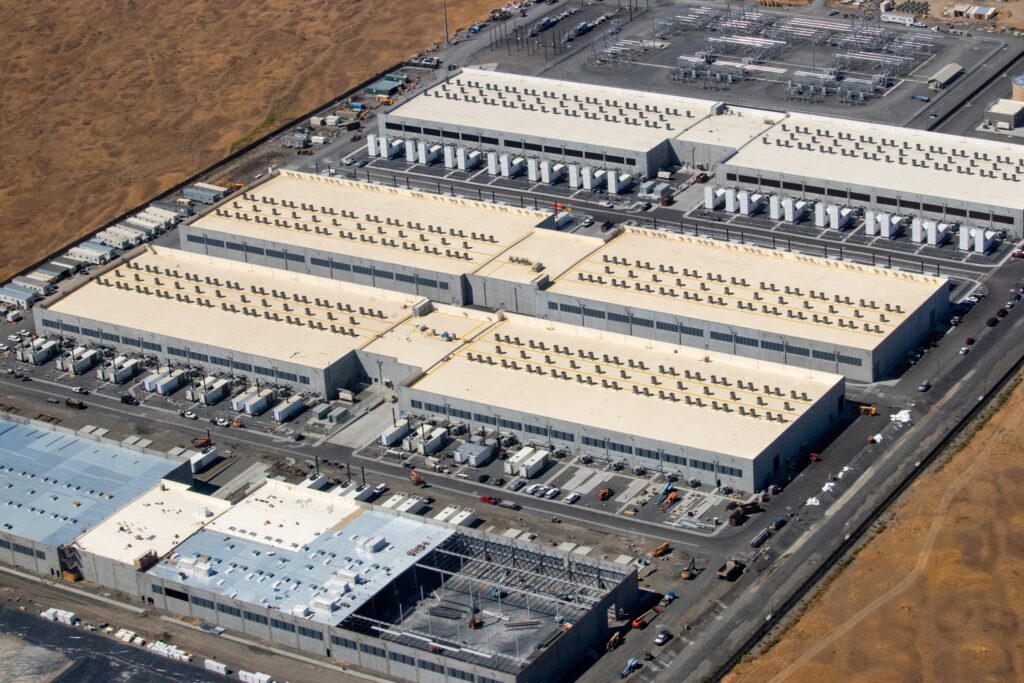
The biggest owner of data centres in the world, Amazon dwarfs competitors Microsoft and Google and is planning a huge increase in capacity as part of a push into artificial intelligence. The Seattle-based company operates hundreds of facilities worldwide, with many more planned despite concerns over how much water is being used to cool them.
Amazon’s data centres were projected to use 7.7 billion gallons of water a year by 2030, according to the leaked strategy memo, which was circulated within the company in 2022. The $2.4 trillion corporation defends its approach to water usage and has taken steps to improve water efficiency.
But while Microsoft and Google regularly publish their water consumption, Amazon has never publicly disclosed how much water its giant server farms consume. In the leaked document, Amazon executives warned that transparency was “a one-way door” and advised keeping its projections confidential, even as they feared inviting accusations of a cover-up.
“Amazon hides its water consumption,” was one hypothetical headline the authors warned of.

When designing a campaign for water efficiency, Amazon Web Services (AWS), the company’s cloud computing division that oversees its data centres, noted that it would be harder to reach its internal target if its calculations included “secondary” use—water used in generating the electricity to power its data centres, according to the document.
Instead, Amazon officials opted to use only the relatively smaller figure of primary use, 7.7 billion gallons, when calculating progress towards its target because of “reputational risk”, fearing bad publicity if the full scale of Amazon’s consumption was revealed, the document shows.
“In environmental science, it is standard practice to include both to more accurately capture the true water cost of data centres,” said Shaolei Ren, associate professor of electrical and computer engineering at the University of California, Riverside.
Asked about the leaked document, an Amazon spokeswoman, Margaret Callahan, described it as “obsolete” and said it “completely misrepresents Amazon’s current water usage strategy”.
She said efficiency savings have already been achieved and pointed out that other companies also don’t count secondary water use.
“A document’s existence doesn’t guarantee its accuracy or finality,” she said. “Meetings often reshape documents or reveal flawed findings or claims.”
Callahan declined to elaborate on which strategic elements of the document were “obsolete”.
Water positive
As US tech companies ride the wave of AI investment and pursue greater heights of computational power, Amazon is building new data centres in some of the world’s driest areas, SourceMaterial and The Guardian revealed in April.
In November 2022, AWS announced a new sustainability campaign, ‘Water Positive’, with a commitment to “return more water than it uses by 2030”.
The leaked document, titled ‘AWS Water Positive Public Launch’ and dated one month before the launch, sets out the campaign’s strategy. Its authors noted that any increase in Amazon’s projected water use could bring bad publicity if the company missed its target.
Using a higher estimate by including secondary use “would double the size and budget” for the campaign “without addressing meaningful operational, regulatory or reputational risks”, they wrote, adding that there was “no focus from customers or media” on water used for electricity.
“It’s a one-way door”
As part of the campaign, Amazon planned water efficiency savings to cut its 7.7 billion-gallon primary consumption to 4.9 billion by 2030 without addressing secondary use. In the meantime, secondary data should only be released if governments demand it, the authors wrote.
“We may decide to release water volumes in the future,” the document said. “But it’s a one-way door and we should only do so if the lack of data undermines the programme or is required by regulators.”
Callahan said that “like other corporate water positive programs, we focus on our direct water footprint in line with industry best practices to ensure we’re making the most concentrated impact possible.” AWS had cut water use per kilowatt of electricity by 40 per cent since 2021, she said.
“It would be better if they could own up to it,” said a current Amazon software developer, who asked to remain anonymous for fear of retaliation. “Even if they said it was a low priority, at least that would be honest.”
Hidden consumption?
The Water Positive campaign only applies to AWS. The wider Amazon group, including the world’s biggest online retail business, has an overall water consumption that is far higher.
In 2021, Amazon as a whole used about 105 billion gallons, as much as 958,000 US households, which would make for a city bigger than Houston, Texas, the document reveals.
“The models referenced in this document were preliminary and unvetted,” said Amazon’s Callahan, who declined to provide any alternative figures.
“Amazon hides its water consumption”
The document’s authors advised not to release data about the wider company.
But they also warned that selective disclosure could lead to accusations of a cover-up. There was “reputational risk of publicly committing to a goal for only a portion of Amazon’s direct water footprint”, they wrote.
They even suggested negative headlines that might result: “Amazon hides its water consumption behind AWS” and “Amazon disappoints, failing to take full responsibility for water” were among the adverse media stories they hoped to avoid.
In a sustainability report last month, AWS claimed it had achieved 53 per cent of its Water Positive goal. The division’s plan for reaching the target relies mostly on “water replenishment” projects, some in partnership with Water.org, a non-profit organisation co-founded by actor Matt Damon. The strategy document refers to these projects as “offsets”, describing initiatives like using Amazon computer technology to help utilities prioritise which pipes to fix in order to minimise leaks.
But of the $109 million AWS planned to spend on offsets, around half would have been spent anyway, either to meet regulatory requirements or because the projects would help AWS operations by making water more available, the document shows. Experts said this amounted to incomplete accounting.
“Regardless of what sort of offsetting or replenishment you do, it doesn’t necessarily nullify the water footprints of your own operations,” said Tyler Farrow, standards manager at the Alliance for Water Stewardship. “Calling your operations water positive or water neutral is misleading.”
Amazon’s Callahan said that the “replenishment spending” is voluntary, not a regulatory requirement.
“We’ve expanded well beyond what was imagined in the document because it’s the right thing to do for the world and for the communities in which we operate,” she said.
‘Obfuscate the footprint’
Amazon is also engineering industry standards to downplay its water use and avert scrutiny, said Nathan Wangusi, a former water sustainability manager at the company.
The corporation has funded efforts by non-profit groups The Nature Conservancy and World Resources Institute, alongside LimnoTech, a consultancy, “to create a globally-accepted methodology for quantifying the benefit of watershed restoration projects”.
Responding to questions from SourceMaterial, all three organisations defended their integrity and independence and said that Amazon had no undue influence on any methodologies they had created.
“They spend a lot of time creating methodologies that are used to obfuscate the water footprint,” Wangusi said, referring to Amazon.
Callahan said these efforts were “standard practice” and that Amazon’s “customers expect us to hold ourselves accountable to credible guidance and best practices”.
As well as choosing not to disclose water use from electricity generation, Amazon has estimated its larger “indirect” water footprint, the document shows. This extra usage, which falls under a classification known as “scope 3”, includes water for production and construction—in Amazon’s case, mostly irrigation of cotton plantations supplying its fashion brands, and vegetables for its grocery arm, Amazon Fresh.
Here too, Amazon decided to keep its consumption confidential, even though “indirect water use represents roughly 90 per cent of Amazon’s total water footprint”, according to the document.
AWS avoided establishing targets for indirect water use because that figure would be “much more significant for the rest of Amazon, especially in the agricultural supply chain, and the team does not want to establish a standard for addressing scope 3 water use that the rest of Amazon would need to follow, given the larger resource implications”, the authors wrote.
“You don’t need to obscure or obfuscate,” said Wangusi, who believes he was “hounded out” of Amazon for criticising the company’s approach. (Amazon declined to comment on his departure.)
“It doesn’t make you more profitable,” he said. “It makes you less trustworthy.”
Headline picture: StockPhotoAstur / Shutterstock.com