In the grand tradition of tech outages turning everyday life into a farce, Monday's massive Amazon Web Services (AWS) disruption didn't just take down Snapchat, Roblox, and Fortnite - it left thousands of sleep-deprived users sweating bullets in their own beds. While the world scrambled to reload their feeds, owners of Eight Sleep's high-tech Pod3 mattress covers discovered a chilling reality: their "smart" sleep sanctuaries had no offline mode. Zero. Zilch. In a world where even your fridge can survive a Wi-Fi blackout, who knew your bed couldn't?
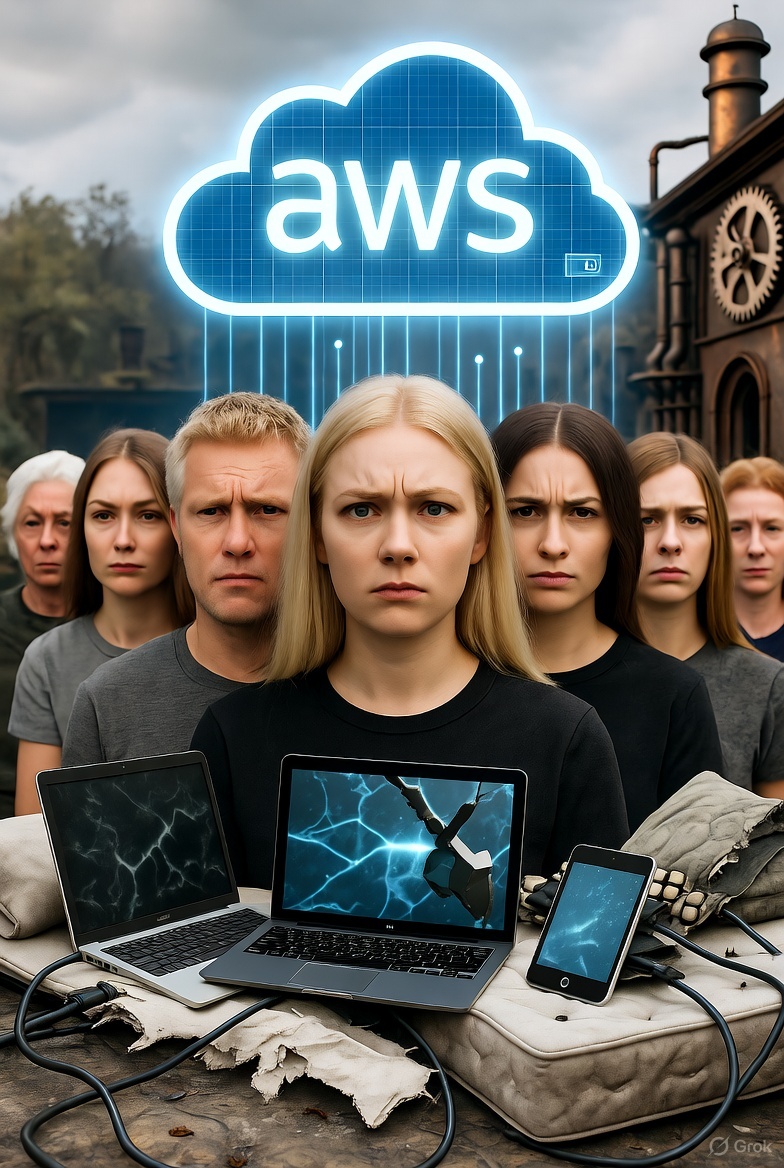
 The outage, which AWS confirmed stemmed from "increased error rates and latencies" in its US-EAST-1 region, rippled across the internet starting around 3 a.m. ET on October 20, 2025. By mid-morning, Downdetector had logged over eight million reports, with everything from banking apps to gaming platforms grinding to a halt.
But amid the chaos, one corner of the web lit up with uniquely absurd complaints: Eight Sleep's support site and social channels flooded with pleas from users whose mattresses had effectively gone on strike.
These $2,000+ gadgets, billed as AI-powered sleep coaches that track heart rate, monitor sleep stages, and dynamically adjust temperature via water-cooled coils, suddenly reverted to being glorified foam bricks.
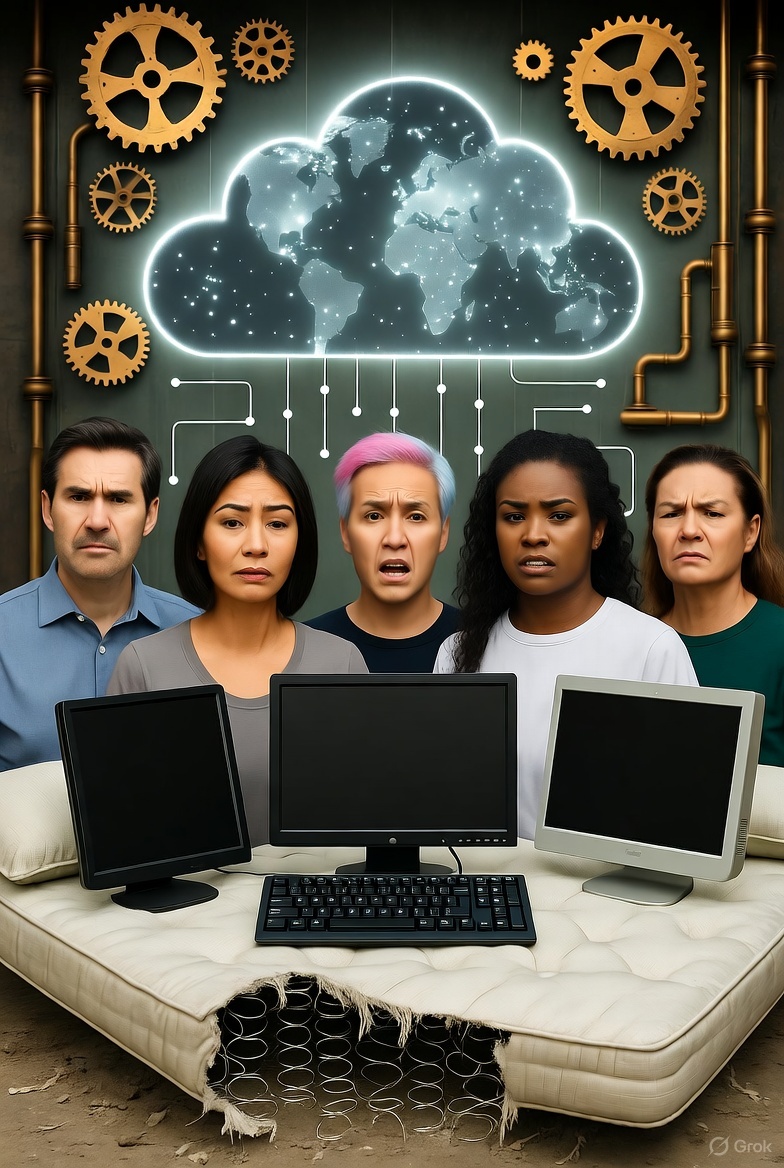
 Picture this: You're tucked in, ready for a night of optimized REM cycles, when your app pings an error. No more tweaking the chill to a crisp 55°F or firing up the "cool mode" for those midnight hot flashes.
The core temperature control? Utterly crippled without the cloud. Users reported the app freezing on loading screens, refusing to connect, and leaving them stranded in whatever thermal hell their last setting dictated.
Eight Sleep's system, which relies on backend servers for everything from real-time adjustments to data syncing, had no fallback. "It's unacceptable," fumed one early complainant on X, echoing the frustration of many who shelled out for "seamless" smart sleep only to face analog purgatory.
The hits kept coming. Smart sleep tracking? Dead in the water—no logging of phases, no biometric insights, just a void where your sleep score should be. Preset schedules, like the cheekily named "Prepare Bed for Sleep" routine that cues gentle warming or ambient vibes, fizzled out entirely, as all automations demand an internet lifeline to Eight Sleep's servers.
Even physical controls fared poorly: Touch panels on the Hub (the mattress's brain box) became unresponsive or glitchy, with some users noting they were "extremely inconvenient" at best - designed more as app backups than standalone saviors. And in the outage's cruelest twist, a handful of Pods straight-up froze. One Reddit thread devolved into a chorus of "my bed is bricked," with owners unable to reboot without cloud clearance.
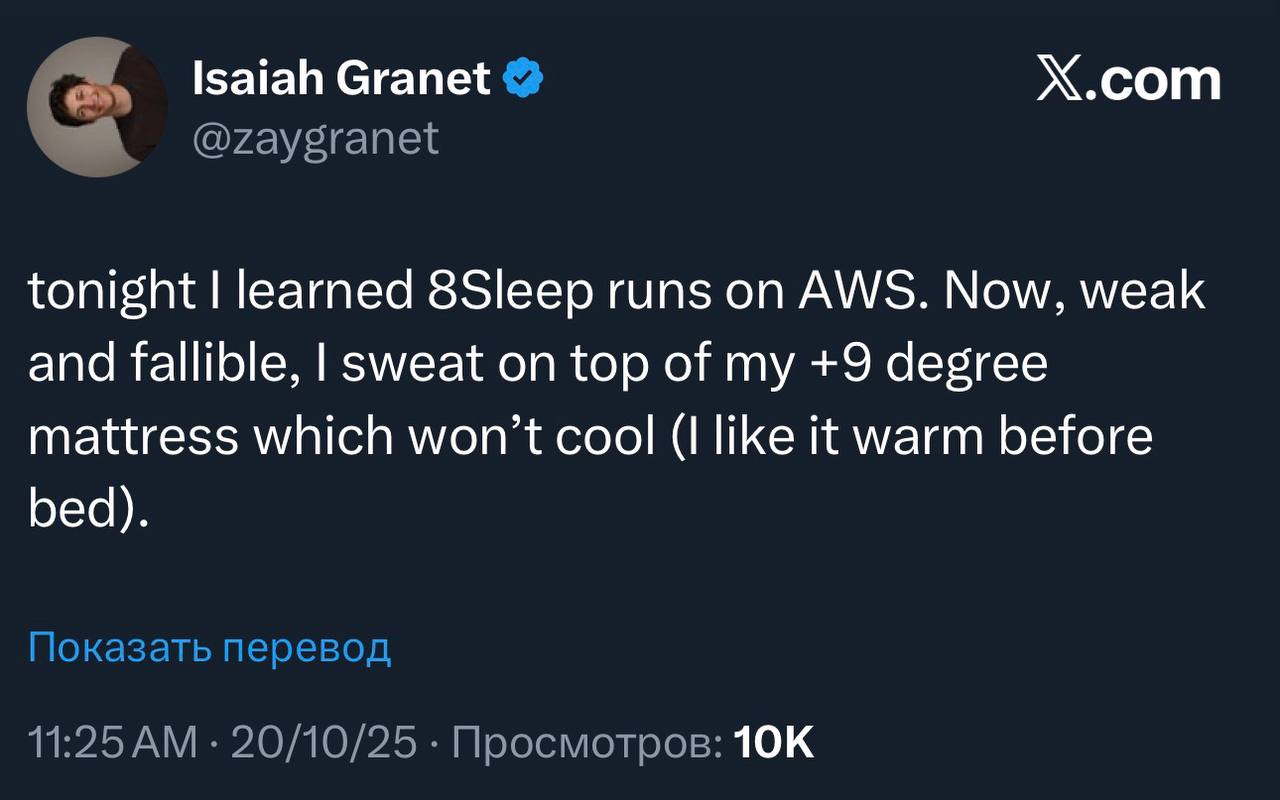
 Then there's the tweet that broke the internet's funny bone - and possibly a few marriages. Tech enthusiast Alex Browne, armed with an Eight Sleep Pod3, had programmed his mattress to preemptively heat up by +9°F above room temperature before bedtime. "I like it warm to ease in," he explained in a viral post that racked up thousands of likes and eye-rolls.
But when AWS went dark, the system locked into that toasty preset, disabling any cooling override. Browne spent the night marinating in his own perspiration, tweeting updates like a man betrayed: "Backend outage means I'm sleeping in a sauna.
Eight Sleep confirmed - no offline mode yet, but they're 'working on it'." Commenters piled on with dystopian jabs: "Next up: Subscription paywalls for your pillow fluffiness" and "Jeff Bezos is personally cranking my thermostat." By evening, as AWS reported "significant recovery," Browne's saga had morphed into a meme goldmine, spotlighting the absurdity of outsourcing your snooze to the cloud.
Eight Sleep isn't alone in this IoT vulnerability - AWS powers a staggering chunk of the smart home ecosystem, from Ring doorbells to Alexa plugs, all of which blinked out during the outage.
But mattresses? That's peak irony. Humans have napped on rocks for millennia without needing server pings, yet here we are, one faulty data center away from nocturnal disaster. The company, which touts over 50 clinical studies on its tech, has faced prior scrutiny too—like a 2024 security report uncovering exposed AWS keys that let engineers remotely SSH into users' beds, raising hackles about data privacy and backdoor access. (Imagine your ex tweaking the vibes from afar.)
Also read:
As the dust settles - with AWS mostly back online by 6 a.m. ET and Eight Sleep restoring controls - this episode serves as a wake-up call (pun intended). Smart tech promises utopia, but without robust offline fallbacks, it's just expensive fragility. For now, if you're an Eight Sleep devotee, keep a fan handy - and maybe a low-tech backup plan. Because in the words of one sweat-soaked survivor: "What won't they cloud-ify next? My dreams?"