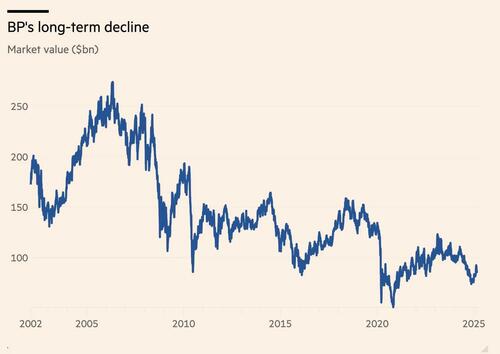
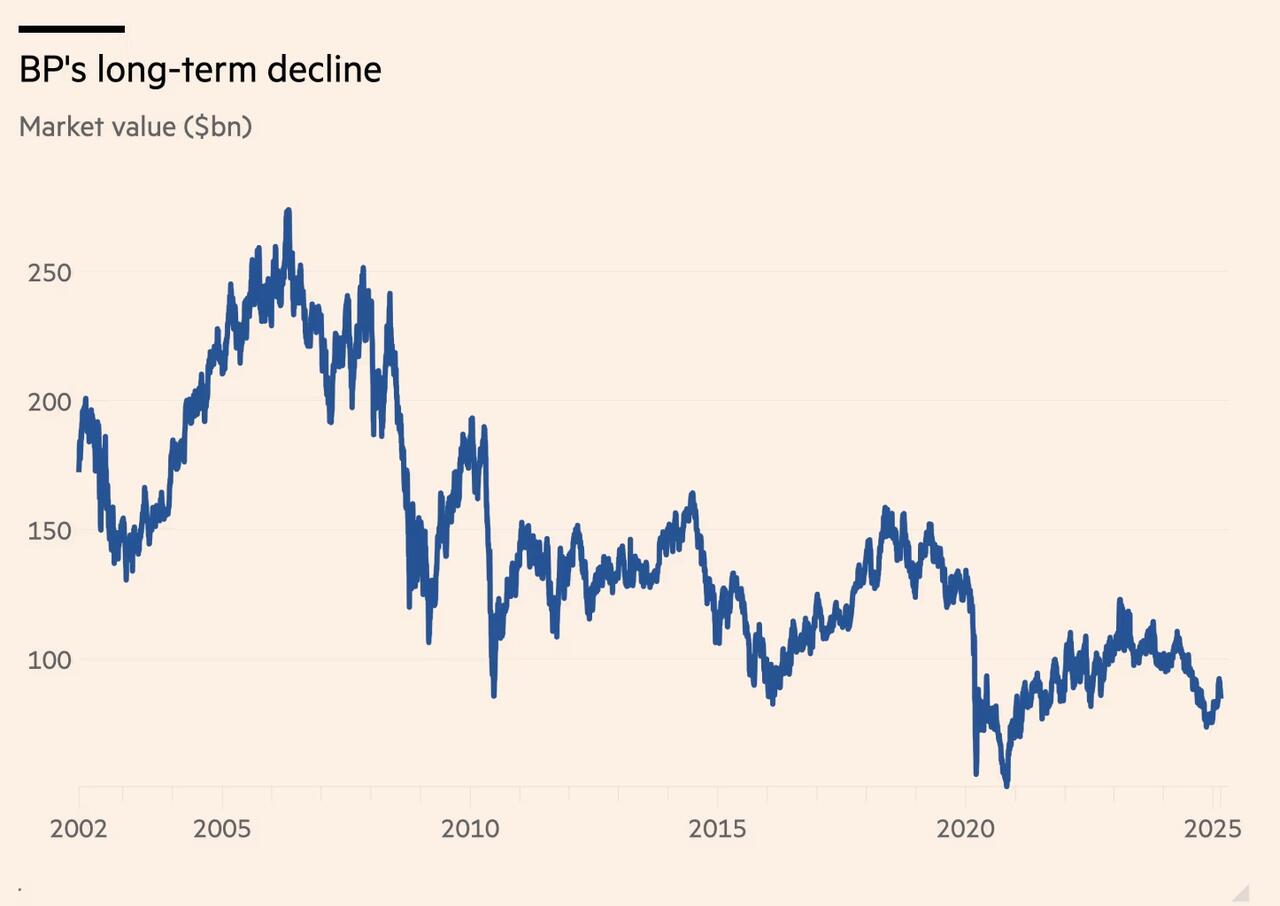
BP’s CEO is setting an ambitious goal to more than double the company’s market value to $200bn within five years, restoring it to pre-Deepwater Horizon levels, according to the Financial Times.
Murray Auchincloss told the Financial Times that BP plans to take advantage of “tremendous” demand for oil and gas after abandoning its push into green energy. “At the end of the decade, it would be nice to be back to where we were before Macondo,” he said, referring to the disastrous oil spill that cost BP $62.5bn in clean-up efforts.
His comments followed BP’s decision to cut annual spending on renewables by 70% and shift its focus back to fossil fuels. The company’s current market value stands at just under £70bn ($89bn).
BP’s latest strategy shift acknowledges that the energy transition is progressing more slowly than anticipated, though the market response has been anything but euphoric.
“Oil and gas demand is going to be around for a long time,” said CEO Murray Auchincloss when asked about BP’s future beyond 2050. He pointed to the rising electricity needs of data centers, making gas a crucial fuel source. “The challenge is how do we decarbonize this stuff as much as you can,” he added, noting BP’s active efforts in carbon capture.
The Financial Times report notes that despite dropping all renewable targets and planning to move its wind and solar businesses off the balance sheet, Auchincloss insists they will remain “very big” parts of BP. He defended the company’s measured approach, stating, “You don’t announce a strategy change until you change it,” arguing that premature announcements would have lacked credibility.
BP has faced criticism for slow execution, particularly after activist investor Elliott took a nearly 5% stake and pushed for more aggressive changes. A source familiar with Elliott’s position said BP’s plans fell short, advocating for major divestments and further cuts to renewables spending. Bloomberg first reported the hedge fund’s dissatisfaction.
Auchincloss declined to comment on any engagement with Elliott but expressed no regrets about his first year as CEO. “Nothing comes top of mind,” he said.
Auchincloss acknowledged that the company will face short-term financial challenges as it rebuilds its oil and gas portfolio after years of downsizing. However, he emphasized that future growth will largely come from the U.S. and the Middle East.
“We’re more American than an awful lot of the American companies are,” he said, highlighting his focus on attracting U.S. investors. Over the coming weeks, BP’s management team plans to engage with more than a third of its shareholders through roadshows. Despite this push, Auchincloss clarified that relocating BP’s listing to the U.S. is “not on the agenda.”
Addressing concerns that BP lags behind rivals like ExxonMobil and Chevron in market value, he defended the company’s assets. “Our size is smaller, but the quality of our assets is exceptionally high,” he said, describing BP’s upstream operations as “world class” and a major competitive advantage. He also pointed out BP’s strong trading operations, something he claimed American companies lack.