Authored by Haley Zaremba via OilPrice.com,
-
China is quickly becoming the world's leading producer of nuclear energy, raising concerns for US competitiveness.
-
China's plans for floating nuclear plants in the disputed South China Sea create tension with neighboring countries.
-
China and Russia's joint project to build a nuclear reactor on the moon raises questions about safety and militarization.
China’s runaway nuclear energy expansion has competitors biting their fingernails. As nuclear energy regains traction around the world as a promising baseload power source for a decarbonized future, it’s also become more and more of a geopolitical battleground. As countries scramble to keep a strategic foothold in a rapidly changing energy landscape, becoming a nuclear energy powerhouse is suddenly important for world superpowers. And China seems to be winning this race.
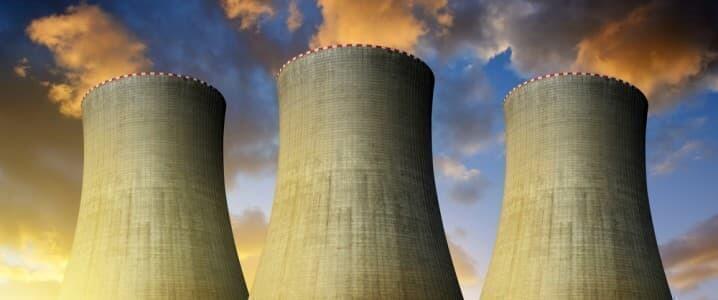
While the United States has been the biggest nuclear power generator in the world for decades, the American market has significantly slowed in recent years at the same time that Beijing has doubled down on deployment, adding a whopping 34 gigawatts of nuclear energy capacity over the last ten years. As a result, China is set to overtake the United States (and France) to become the world’s biggest producer of nuclear energy within the decade.
China currently has 55 operating nuclear power reactors compared to the United States’ 94, but it already has 23 new reactors under construction and more on the way. In fact, it’s taken China just 10 years to add the same amount of nuclear capacity that the United States needed four decades to build.
Beijing is able to approve new nuclear reactors at a much faster clip than the United States, at a blazing rate of ten new plant approvals per year. Chinese plants are also much less expensive to build, in part thanks to preferential loans with particularly favorable terms from state-owned banks. While the United States has recently taken pains to kick-start its own stalled nuclear energy sector, its newest power plant is so behind schedule and over budget that nuclear energy advocates are worried that it might derail the nation’s nuclear ambitions altogether.
While the sharp rise in nuclear energy deployment in China is great news for the nation’s decarbonization potential – and therefore great news for the entire world’s ability to meet mid-century climate goals – China’s fast and furious approach has put a number of world leaders on edge. Policymakers in the United States have demonstrated concern that China’s rapidly increasing nuclear energy capacities could allow it to export nuclear reactors at a large scale, ultimately undermining U.S. foreign relations in the importing countries. This would not be a new trend, but a continuation of China’s already massive expansion of energy influence in emerging markets.
Meanwhile, China’s plans to put floating nuclear power plants in the South China Sea have stirred up tensions with its Southeast Asian neighbors. China, Malaysia, Vietnam, and the Philippines all have overlapping claims to parts of the sea, which China claims almost in its entirety despite a 2016 ruling by the Permanent Court of Arbitration which rejected Beijing’s claim as “having no legal basis.” In contempt of this ruling, China has continued to ‘reclaim’ land to build artificial islands in the Sea and now plans to send about 20 floating nuclear power plants to some of those islands.
Experts have widely condemned these plans, warning that “China’s planned deployment of floating nuclear reactors to the disputed South China Sea may risk ramping up tensions with other claimants and undermining regional security.” Adding to these tensions, there is some legitimate concern that China will be using these plants to power military operations in the conflicted region, which would be in violation of international law.
Indeed, China’s outsized nuclear ambitions cannot be hemmed in by its own borders, or even terrestrial bounds. Earlier this year, Moscow and Beijing announced joint plans to put a nuclear reactor on the moon within the next decade. Russian state media even claims that development of the plant is already underway and Russia and China are currently working on experimental and research facilities under the project.