
Authored by George Ford Smith via Mises Institute,
The Federal Reserve's inflation machine not only disrupts our lives now, but it also is making life even for difficult for those facing an uncertain future...
My grandson is 21, pursuing a degree in college and active in sports and social life. His future looks bright. But he and others of his generation will enter that future with a handicap imposed on them by people they have never met: Policymakers at the Federal Reserve. They claim to be "firmly committed to fulfilling its statutory mandate from Congress of promoting maximum employment, stable prices, and moderate long-term interest rates."
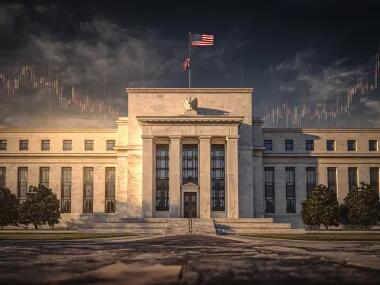
What's wrong with that? In Fed parlance "stable prices" mean prices that remain roughly the same. As a government-created central bank that manages the nation's monetary system, the Fed calls 2 percent inflation over the longer run "price stability." But 2 percent inflation does not mean stable prices, it means prices approximately double over 35 years.
And, since the Fed rarely if ever hits the 2 percent target, CPI calculations based on government historical data show prices increasing at a much higher rate. More importantly for a government so attracted to war, the Fed will always shelve its 2 percent target to feed government's hawkish appetite.
Yes, Fed monetary managers are fallible, one could argue. They're well-educated and experienced, but they still err. Aren't they doing the best they can, given their unwritten partnership with government?
But the relevant question is: Are they necessary? Milton Friedman's paper "Monetary Policy: Theory and Practice," published in the Journal of Money, Credit, and Banking on February 14, 1982, says loud and clear they are not.
If a domestic money consists of a commodity, a pure gold standard or cowrie bead standard, the principles of monetary policy are very simple. There aren't any. The commodity money takes care of itself.
Friedman, strangely, did not conclude from this that we should simply return to a classical gold standard. He famously criticized commodity standards partly because maintaining them consumes real resources - labor and capital devoted to mining and storing monetary gold. He generally favored fiat money governed by rules, apparently forgetting that rules in government hands are never hard and fast but always subject to expediency.
Economics as a Neutral Science
Gary North, in his 2016 essay, "The Moral Issue of "Honest Money," explores Friedman's objections to gold. He begins by criticizing economics as "neutral," as unconcerned with moral issues. What does a morally neutral viewpoint look like?
"If the Nazis wish to exterminate 50,000 people, which are the most cost-effective means?" No morality, you understand, just simple economic analysis. The problem with the theory of neutral economics is that people are not neutral, effects of government policies are not neutral, social systems are not neutral, legal systems are not neutral, and when pressed, even economists are not neutral.
Most people, and this "includes virtually all Ph.D.-holding, card-carrying economists," believe public confidence and not gold is what matters most in monetary affairs. But the contractual right to redeem gold (or silver) for the promised metal spelled out on the face of the commodity substitute (a warehouse receipt) is the public's way of guarding their guardians and ensuring the public's trust. Let's not forget:
Government and its licensed agents have a monopoly of money creation. Private competitors are called counterfeiters.
Bitcoin partially achieves competitive status as a store of value because of its cap at roughly 21 bitcoin. No FOMC decides to increase that ceiling because unemployment rises, banks fail, or the government needs to fund another war.
If the government issues currency such as have today - without a promise of redemption - the public can only rely on government-established means such as elections to govern their "public servants." But elections are not contracts. A politician promising peace if elected is under no obligation to pursue peace, as Americans have seen especially since 1917.
There are, of course, constitutional mechanisms other than elections for controlling federal officials: separation of powers, judicial review, impeachment, congressional investigations, appropriations, and, ultimately, constitutional amendment. A president or other civil officer can be impeached by the House and removed after a two-thirds Senate conviction. A member of Congress can be expelled, but that requires a two-thirds vote of the member's own chamber.
But notice the difference from redemption. Under the old convertibility arrangement, someone dissatisfied with the currency didn't have to persuade 51 percent of the electorate or bear the cost of a lawsuit. He could say, in effect: "I don't trust your paper. Give me the gold you promised."
North's criticism of Friedman rests on a confirmation of the latter's objections, given the restrictions that a gold standard imposes on government. North begins:
It is quite true, as Milton Friedman has stated so graphically, that the gold standard is expensive. We dig gold out of the ground in one location, only to bury it in the ground in another location. We cannot do this for free. Wouldn't it be more efficient, meaning less wasteful of scarce economic resources, Dr. Friedman asks, just to forget about digging up gold? Why not keep the government or the central bank from expanding the money supply? Then the same ends could be accomplished so much less wastefully. Save resources: trust politicians.
But this is not the whole story.
By tying the currency unit to that gold - which is wonderfully expensive to mine, as any monetary brake should be and must be - the body politic enlists a cadre of professional, self-interested speculators to serve as an unpaid police force. This police force polices the trustworthiness of government monetary promises.
The public can relax, knowing that a hard core of greedy capitalists is at work for the public interest, monitoring Federal budgets, Federal Reserve policies, and similarly arcane topics. By forcing the Treasury to "go long" in its own promises market, the guardians are guarded by the best guards of all: future-predicting, self-interested speculators whose job it is to embarrass those who do not honor contracts - their own contracts.
Conclusion
Government is not just force, but a legal monopoly of superior force. When that monopoly expanded to money as it did with the Federal Reserve Act of 1913, government started a ball rolling in our direction that intentionally siphons purchasing power from our currency.
Fiat money depends on Fed-government restraint. That restraint loosens as world crises develop. Since fiat money feeds the crises, the prospects for restraint are anyone's guess.
The money you earn is yours. A monetary system based on gold, unencumbered by government manipulation, helps you keep it by protecting its purchasing power. People just starting out in life, such as my grandson, would do well to understand that principle - especially when our present fiat system falls apart.
We publish a variety of perspectives. Nothing written here is to be construed as representing the views of ZeroHedge.