
Syria's geography has long given the country huge economic opportunities as a major energy transfer hub connecting Middle East states to the Mediterranean.
But as the last decade plus of proxy war which resulted in the overthrow of Bashar al-Assad demonstrated, Syria has also long been target of foreign machinations bent on seeing a puppet state installed in Damascus. The US-Gulf allies broadly waged war against the so-called 'Shia crescent' represented in the old Baghdad-Damascus-Hezbollah axis.
Henry Kissinger famously stated of its opportunity-rich geography, "you can't make war in the Middle East without Egypt and you can't make peace without Syria." The historiographical term Pax Syriana also captures this concept: as goes Syria, so goes the whole region.
Of course, the external powers which have long sought to dominate the region both politically and on the energy front know this full well, which makes it all the more shameful and ironic that mainstream media and government officials had long derided as 'conspiracy theorists' anyone who connected a 'pipeline wars' theme with Washington's covert war on Syria.
Widespread derision was the reaction of MSM punditry when back in 2016 Robert F. Kennedy Jr. penned the following excellent lengthy investigation:
Fast-forward to 2026, amid Trump's Iran war and the Strait of Hormuz crisis, and another conspiracy theory becomes conspiracy fact (as we've been documenting of the great crude transit 'rewiring' efforts to erode Iran's leverage over the Hormuz passage).
On Wednesday, cue a new Bloomberg headline: Syria Set to Emerge as Hormuz-Bypass Option for Iraq's Crude Oil.
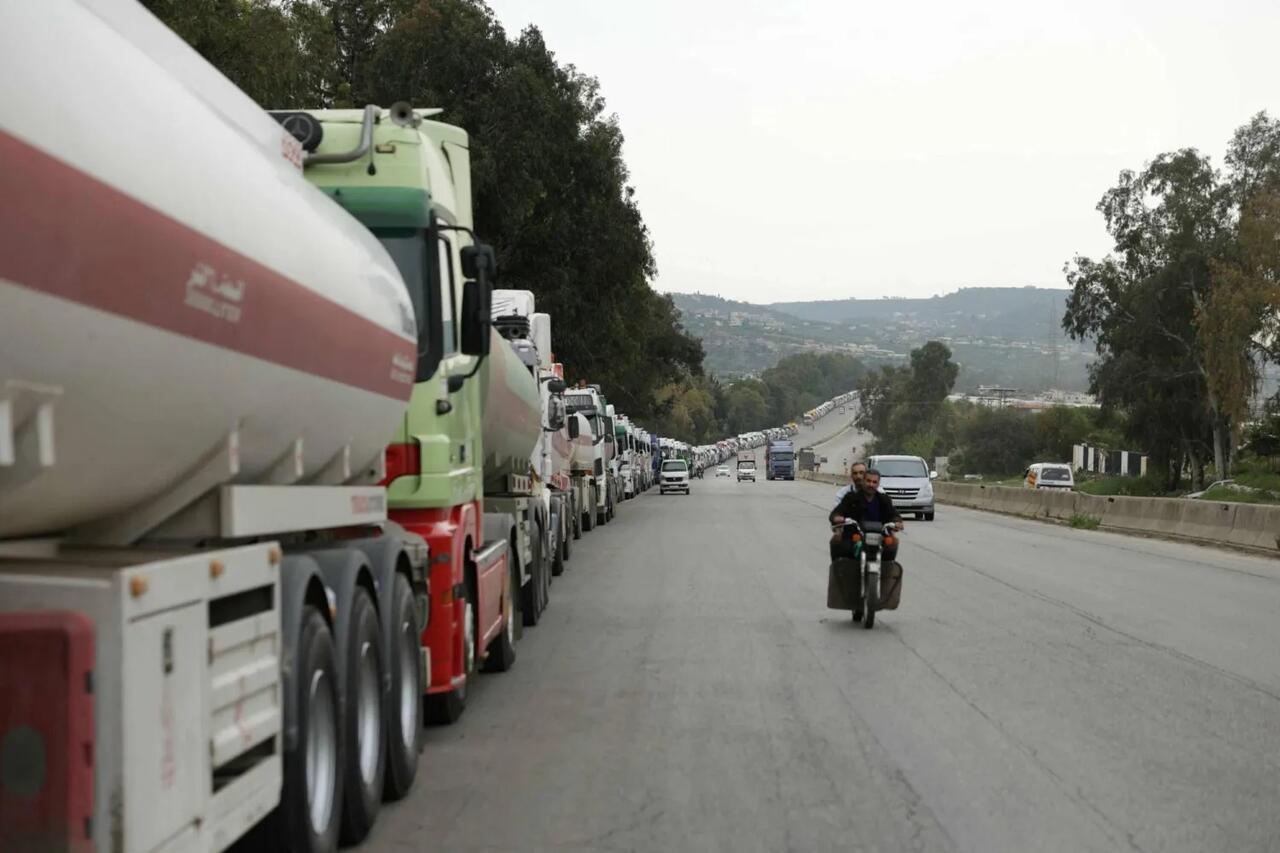
The deserts of Western Iraq and Eastern Syria are set to look like a scene out of Max Max, apparently. "Syria is set to provide a route for Iraqi crude exports to avoid the hazardous Strait of Hormuz, with a stream of trucks being lined up to haul oil overland to a port on the Mediterranean Sea," Bloomberg writes.
"The Iraqi government asked Syria to help with the export of crude in addition to existing flows of fuel oil, Yousef Qiblawy, chief executive officer of the state-owned Syrian Petroleum Co., said in an interview with Bloomberg News," the report continues.
To some degree, this overland route was already being 'tested' during the latter years of the Syrian proxy war, when US forces occupied Syria's oil and gas fields of Deir Ezzor and Al-Hasaka regions.
Reviving land corridors from Iraq to the Mediterranean:
Hormuz disruption revives land corridors from Iraq to the Mediterranean The Strait of Hormuz handles a massive slice of the world's oil and gas — and with that route under threat, the region is dusting off old alternatives. One proposal gaining attention: a land corridor linking Iraqi oil fields to the Mediterranean via western Iraq and Syria. Iraq is already weighing this against the Turkish Ceyhan route and a possible path through Jordan. Syria, for its part, could reclaim its historic role as a bridge between Iraq and the Mediterranean Sea. Iraqi fuel oil and other petroleum products are reportedly already moving by truck through Syria to Mediterranean ports, then on to Asia and Europe — no Hormuz involved. https://t.co/AWbFJOGcwC
— Sputnik (@SputnikInt) September 27, 2026
They had run tanker trucks in the other direction - from Syria into Iraq, siphoning off Syrian oil and its sovereign resources, after President Trump during his first term hailed that the Pentagon would 'secure the oil'.
Read our: Mystery Explosions: Syria's Recovering Gas Network Keeps Getting Sabotaged
As for actual pipeline routes from Iraq to the Mediterranean via Syria being revived, major hurdles remain and its not just the gargantuan cost of reviving the derelict hardware - but there's an obvious security problem in a country that's seen mysterious armed groups constantly bomb Syrian energy infrastructure - both during the Assad years and now under Jolani.