
One of the enduring weaknesses of the modern US economy is the lack of redundancy. As long as most of the world is operating normally and there are no serious geopolitical disruptions, America's "just in time" system works fine. But, throw a monkey-wrench into distribution, global exports, freight systems, shipping or elements of production and cracks quickly form in the armor.
This does not mean that the US economy can't adapt; the pandemic shutdowns were horrifically pointless but they did prove that the system has the ability to function despite deep deficiencies. However, when it comes to the management of vital resources, such as energy resources, it's clear that some changes need to be made in the near term.
Before the war in Iran a large portion of the public was oblivious to the fact that the US is the largest exporter of oil in the world, and of the foreign oil supplies we do receive, only 8% come from Gulf nation producers. A mere 7% of those supplies travel through the Strait of Hormuz. In other words, the US doesn't rely on the Gulf for oil. With the new Venezuelan deal and oil flows from the gulf back to 98% of pre-conflict levels, the war is even less of a concern when it comes to US energy.
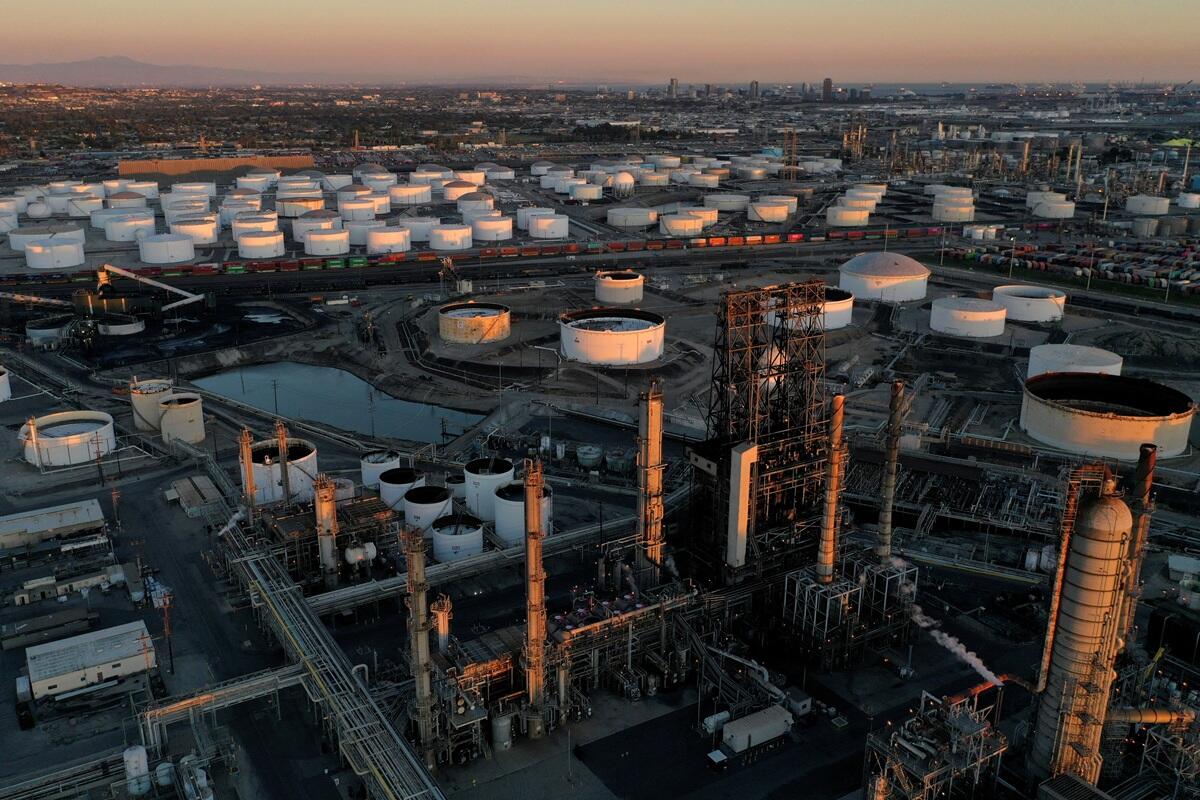
The problem is, there is a global oil refinery capacity shortage, and the US is not adapting as it should.
Ukrainian drone strikes against Russian refineries have recently forced the Kremlin to cut off all diesel exports to other countries. Russia is the second largest supplier of diesel in the world with 12% of all exports. This loss to global markets is straining already struggling refineries and causing prices to climb. The only country with the ability to increase refining capacity quickly is the US, but it's not happening.
The last time a full-conversion refinery was built in the US was Marathon’s Garyville, Louisiana plant. It came online in 1977 at about 200,000 b/d and has since been expanded to about 617,000 b/d. Most U.S. capacity growth since the 1970s has come from expanding existing sites, not building new ones.
In five decades, no major infrastructure has been added. This means that as aging plants shut down, or as they are closed down due to state policies, US refining capacity will continue to fall and the ceiling for supply vs demand will get tighter and tighter.
Currently, national demand for distilled products is 8.7 million b/d, and production provides only 9.5 million b/d - That's an extremely narrow gap at 95%-98%. Unfortunately, this gap has narrowed further due to refinery closures in 2025. The largest drop in U.S. capacity came from the shutdown of the LyondellBasell’s Houston plant (about 264,000 barrels per day) and the Phillips 66’s Los Angeles plant (about 139,000 barrels per day). Together those removed about 400,000 b/d; small expansions elsewhere offset some of that, but not enough.
The Houston plant was built in 1918 and was so old any expansion or updating would have been too costly. Plants in California, on the other hand, have been closing due to crushing regulations. Valero’s Benicia plant (about 145,000 b/d) stopped refining this spring and was taken out of monthly capacity later.
The answer to refinery shrinkage has long been "expansion creep" in existing facilities because it's faster than building brand new infrastructure, but this is not going to help for much longer. Current facilities are limited in their ability add on more capacity and these measures do not account for abrupt global changes, wars and crisis events.
The US needs redundancy, not "just in time" economics.
Estimates suggest that up to eight new refineries (for heavy and light crude) running at least 250,000 b/d would be needed to increase the capacity ceiling while adding modern infrastructure and redundancy to offset aging plants. A safer margin would be demand at 85%-90% of capacity. This would also help the US to add supplies to any global market shortfall and keep prices from skyrocketing in the event of ongoing wars.
What's stopping this from happening? There's a number of obstacles. First and foremost, no one wants to sink billions of dollars into a new facility based on higher gas margins that might be temporary. In other words, investors will wait around until there's a catastrophic disruption and prices go out of control, but by then it will be too late.
This means it's likely that the only way to get new refineries built would be for the US government to partially backstop the investment. It's not the worst way to spend taxpayer money; everyone likes lower gas prices. Getting such a measure passed through congress is questionable, though.
One possible avenue would be profit sharing with taxpayers on excess fuel sold, or on exports sold from new refineries. This is similar to the Saudi Arabia model, which invests some oil profits back into healthcare, education, housing loans, and cheaper fuel and utilities for citizens. Of course, Saudi Arabia is a monarchy and moving from theory to practice in the US is another matter.
Then there's the permits, environmental studies and regulations, and a lot of other red tape that can extend build time up to 10 years. Even with a streamlined bureaucracy, it can still take 3-5 years. With government aid, the time can be reduced to 1-3 years. It's clear that this is not a quick fix in any scenario, but if the process had been started a few years ago, then there would be no capacity issue and there would be no need for this discussion.
Again, the US economy is almost designed to avoid redundancy and preparedness.
There is the possibility that a rush to build refineries is unnecessary in the short term. With ship traffic in the Hormuz returning to normal, prices on oil will continue to drop. This does not mean, though, that gasoline prices will fall in tandem, at least not for months to come. The war in Ukraine also looks like it will be ongoing for some time, which means Russian supplies will not be returning to global markets.
Refineries are a long term solution which requires long term planning; something which is nearly impossible within the US where the political landscape changes every 2-4 years. It is also extremely difficult when half the government under Democrats wants to tear down oil infrastructure and force the country to accept inefficient green tech. The point is, there are obvious fixes available, but nothing will happen until disaster strikes and politicians are effectively frightened.