
Tuesday's White House "Super Intelligence" luncheon was sold as a kumbaya moment. Tech titans flanked President Trump on the driveway after signing a voluntary, "morally binding" pledge to police themselves, and the cameras got their picture of a united industry calming the public's nerves.
Behind the scenes, it was a different story.
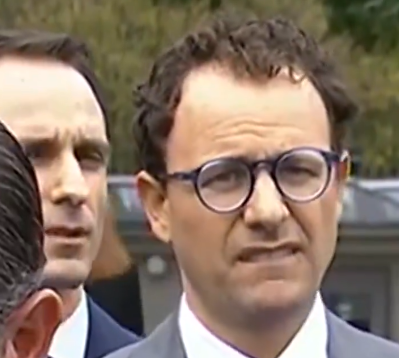
According to the Wall Street Journal, Nvidia's Jensen Huang was among a group of executives who confronted Anthropic CEO Dario Amodei after the East Room lunch. They wanted to know why he keeps going to such extremes in public about what AI models can do and how dangerous they might be. The exchange took place in the Roosevelt Room, where a smaller group of CEOs and White House aides were hammering out the final text of the principles.
Amodei apparently didn't fold. He told his fellow executives that the public deserves honesty about model capabilities, and that downplaying the risks isn't an option.
Meta's Mark Zuckerberg supplied the other half of the pincer during the lunch itself. When Amodei raised his safety concerns, Zuck reportedly answered that the way to address them was for the industry to follow through on the very principles everyone was about to sign and self-regulate (bitch!).
Translation: Nice speech, Dario. Sign here.
Zuck Holds The Pen
Zuckerberg apparently played a central role in finalizing the accord, talking frequently with Trump and with Commerce Secretary Howard Lutnick. Lutnick's department runs a key government AI testing unit. It is also the department that, as we noted in July, cut off access to Anthropic's Fable 5 and Mythos 5 for about 2½ weeks before lifting the export controls.
The push for Tuesday's lunch reportedly began at last week's state dinner for Xi Jinping, where Zuckerberg sat next to House Speaker Mike Johnson and the two talked AI policy. From there, Zuck and Huang worked the phones to line up the CEOs while Trump and Johnson organized the event to build consensus.
Amodei skipped that state dinner and got his own private dinner with Trump on Sunday, his first face-to-face with the president.
Look at this:
The Regulator That Wasn't
Over the summer, Anthropic, OpenAI and Google had rallied around a FINRA-style self-regulatory organization that the administration was considering, modeled on the body that polices brokerages. Huang, Zuckerberg and Elon Musk then told Trump that such a body would concentrate too much power in the hands of the leading labs. The idea was scrapped.
Many of the same concepts survived in Tuesday's principles anyway, including tougher internal model reviews during development and outside testing. The difference is that nobody now has the job of enforcing them. Trump has floated a 10-person committee to oversee the sector, but House Speaker Mike Johnson stressed the pledge is "voluntary on behalf of the industry," and House Minority Leader Hakeem Jeffries called it "entirely unenforceable."
Huang, Zuckerberg and Musk aren't the only ones making the capture argument. When Amodei published his We Must Pace the Frontier essay last month, former AI czar David Sacks fired back that Amodei and Sam Altman are the frontier, holding a de facto duopoly on frontier intelligence. Skeptics have long argued that a "pacing" regime run by the incumbents looks a lot like a moat. That argument gets louder when the company preaching caution is reportedly lining up an IPO at a valuation of around $2 trillion.
From Punching Bag To 'Outstanding People'
Watching the absolute drama between frontier AI companies and the Trump administration has been an exercise in whiplash.
- The Pentagon threatened to blacklist Anthropic over its guardrails on military use and then followed through. A federal appeals court upheld that blacklisting just last Friday.
- Commerce forced the roughly 2½-week shutdown of Fable 5 and Mythos 5 over security concerns.
- The pacing essay helped knock the legs out from under the AI trade, and the next day Trump went after Dario by name for "pretending to be a 'perfect little angel.'"
Yet on Tuesday, Amodei told reporters that the industry and the administration could win the AI race safely if they worked together. Asked why executives should be trusted to police themselves, Trump said: "Because they're outstanding people." Director of National Intelligence Jay Clayton, reportedly in line to become Trump's next AI czar, went further - calling the gathering "one of the most, if not the most, constructive and collegial industry meetings" he had ever seen.
Zuck's Glow-Up
Then there's Zuckerberg, who went from banning Trump after January 6 to helping write his AI policy. In Trump's second term, Meta settled the lawsuit over the suspension, rolled back its fact-checking, hired Trump-friendly executives and donated to the president's pet causes. On Tuesday, Zuck was all smiles beside Trump at the presser, saying the industry wants to give Americans confidence that the technology works as intended.
What a pack of whores, eh?