
The Supreme Court on Friday refused to let Missouri Republicans run November's House races on the 2025 map that would have given them a 7-1 edge in the state's delegation, leaving in place the 2022 lines, which split the eight seats 6-2.
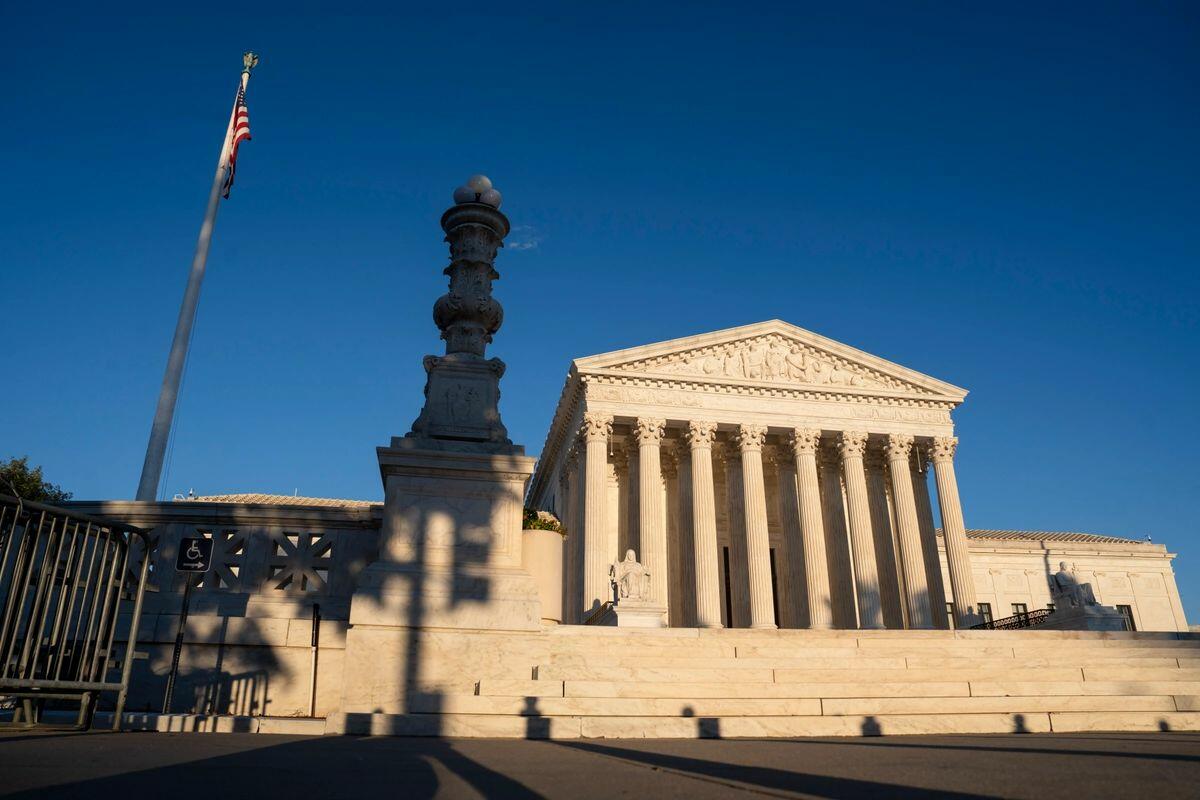
The court's unsigned, five-page opinion in People Not Politicians v. Onder drew no dissents. "In short, as a matter of state law, the 2022 map - not the 2025 map - must be used in the 2026 congressional election," the justices wrote.
The fight has run through three courts in a month. Missouri's Aug. 4 primaries, run by Secretary of State Denny Hoskins, were held on the 2025 lines. On Sept. 3, the Missouri Supreme Court unanimously ordered the 2022 map for November, and county clerks began mailing military and overseas ballots on it. On Sept. 21, an Eighth Circuit panel ordered the 2025 map restored, ruling that holding the general election on different districts than the primary would violate the Constitution. People Not Politicians, the group opposing the 2025 map and seeking a referendum on it, asked the justices to step in the next night.
As The Epoch Times notes further,
In the high court's new opinion, the justices summed up the legal theory argued by the federal plaintiffs - Rep. Bob Onder (R-Mo.), Republican congressional nominee Rick Brattin, and two Republican voters.
Their argument was that three parts of the U.S. Constitution - Article I, Section 2, which establishes the fundamental rules governing the U.S. House of Representatives, the Elections Clause, and the Equal Protection Clause of the 14th Amendment - combine to forbid Missouri from using different congressional maps in the primary and general elections.
The justices did not reject Onder's constitutional theory. Instead, they said they did not have to rule on it.
"On the merits, the Court's precedents have not previously stated that Article I, Section 2 requires a state to use the primary election map in a general election, and given that the equities heavily favor staying this late-breaking intervention, it suffices that the merits are not entirely clearcut."
In other words, the justices did not hold that using different maps in the primary and general elections is constitutional. They held that the claim was too unsettled - and the election too far along - to justify an injunction.
The justices then turned to the Purcell principle, the doctrine that federal courts should not change a state's election rules close to an election. The justices said the principle "applies with even greater force here" because the election "is not merely upcoming; it has already started."
Local election officials told the courts it was "practically impossible to revert" to the 2025 map. "At this late date, ordering reversion to the 2025 map in the midst of an ongoing election would usher in electoral chaos. Purcell protects against such disorder."
The Eighth Circuit argued the opposite: that Purcell favored the 2025 map because that was the map used in the August primary, and that the Missouri Supreme Court's Sept. 3 ruling constituted the last-minute disruption.
The justices said that federal courts' interpretation of Purcell was incorrect because Purcell constrains federal courts, not states.
"Even though federal courts should not impose changes close to an election, States are free to decide for themselves whether last-minute changes to an election are in their best interests," the justices said, quoting Allen v. Milligan (2023).
The Missouri Supreme Court, the justices added, was not the source of the late change. In opinions issued in May 2026 - months before the primaries - the state high court had already said the 2025 map would not take effect unless voters approved it in a referendum, as long as the petition calling for it was legally sufficient.
Hoskins "was well aware that conducting the August primary election with the 2025 map carried significant risks," the justices said.
"The Secretary nonetheless chose to proceed with the 2025 map for the primary."