Authored by Breeauna Sagdal via The Brownstone Institute,
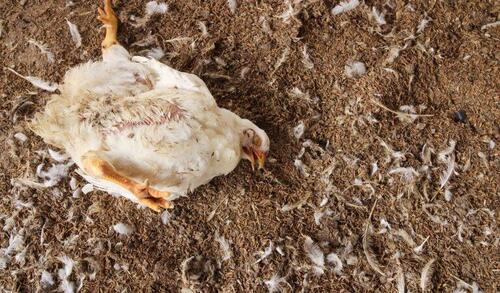
Seasoned veterinarians and livestock producers alike have been scratching their heads trying to understand the media’s response to the avian flu.
Headlines across every major news outlet warn of humans becoming infected with the “deadly” bird flu after one reported case of pink-eye in a human.
The entire narrative is predicated upon a long-disputed claim that Covid-19 was the result of a zoonotic jump—the famed Wuhan bat wet-market theory.
While the source of Covid is hotly contested within the scientific community, the policy vehicle at the center of this dialectic began years prior to Sars-CoV-2 and is quite resolute in force and effect.
In 2016, the Gates Foundation donated to the World Health Organization to create the OneHealth Initiative. Since 2020, the CDC has adopted and implemented the OneHealth Initiative to build a “collaborative, multisectoral, and transdisciplinary approach—working at the local, regional, national, and global levels—with the goal of achieving optimal health outcomes recognizing the interconnection between people, animals, plants, and their shared environment.”
In the aftermath of Covid-19, the OneHealth Initiative began taking shape, due largely in part to millions of tax dollars appropriated through ARP (American Rescue Plan) funding.
Through its APHIS (Animal and Plant Health Investigation System) the USDA (United States Department of Agriculture) was given $300 million in 2021 to begin implementing “a risk-based, comprehensive, integrated disease monitoring and surveillance system domestically…to build additional capacity for zoonotic disease surveillance and prevention,” globally.
“The One Health concept recognizes that the health of people, animals, and the environment are all linked,” said USDA Under Secretary for Marketing and Regulatory Programs Jenny Lester Moffitt.
According to the USDA’s press release, the Biden-Harris administration’s OneHealth approach will also help to ensure “new markets and streams of income for farmers and producers using climate smart food and forestry practices,” by “making historic investments in infrastructure and clean energy capabilities in rural America.”
In other words, the federal government is using regulatory enforcement to intervene in the marketplace, in addition to subsidizing corporations with tax dollars to direct a planned economic outcome—ending meat consumption.
Climate-Smart Commodities – Planning the Economy through Subsidized Intervention
Under the recently announced Climate-Smart Commodities program, the USDA has appropriated $3.1 billion in tax subsidies to one hundred and forty-one new private Climate-Smart projects, ranging from carbon sequestration to Climate-Smart meat and forestry practices.
Private investors such as Amazon founder Jeff Bezos – who just committed $1 billion to the development of lab cultured meat-like molds, and meat grown in petri dishes, to
Ballpark, formerly known for its hot dogs but is now harvesting python meat, is rushing to cash in on this new industry, and the OneHealth/USDA certification program.
Culling The Herd – Regulatory Intervention in the Marketplace
Meanwhile, the last vestiges of America’s food freedom and decentralized food sources are quietly being targeted by the full force of the federal government.
The once voluntary APHIS System is poised to become the mandatory APHIS-15, which among many other changes, “the system will be renamed Animal Health, Disease, and Pest Surveillance and Management System, USDA/APHIS-15. This system is used by APHIS to collect, manage, and evaluate animal health data for disease and pest control and surveillance programs.”
Among those “many changes” that APHIS-15 is undergoing, one should be of particular interest to the public—the removal of all references to the voluntary* Bovine Johne’s Disease Control Program.
“Updating the authority for maintenance of the system to remove reference to the Bovine Johne’s Disease Control Program.”
In addition to removing references to the once-voluntary herd culling program, the USDA is also implementing mandatory RFID ear tags in cattle and bison.
According to the USDA/APHIS-15, expanded authority places disease tracing in their jurisdiction and the radio frequency ear tags are necessary for the “rapid and accurate recordkeeping for this volume of animals and movement,” which they say “is not achievable without electronic systems.”
The notice clearly spells out that RFID tags “may be read without restraint as the animal goes past an electronic reader.”
“Once the reader scans the tag, the electronically collected tag number can be rapidly and accurately transmitted from the reader to a connected electronic database.”
However, industry leaders and lawmakers alike have said the database will be used to track vaccination history and movement, and that this data may be used to impact the market rate of cattle and bison at the time of processing.
Centralized Control of Processing/Production via Public-Private Partnership Agreements
In addition to the vast new authority of the USDA funded through the OneHealth Initiative, and the ARP, the EPA has also created its own unique set of regulatory burdens upon the entire meat industry.
On March 25, 2024, the EPA finalized a new set of Clean Water Act rule changes to limit nitrogen and phosphorus “pollutants” in downstream water treatment facilities from processing facilities. While the EPA’s interpretation of authority and jurisdiction over wastewater is concerning long-term, the broader context of consolidated processing under four multinational meat-packing companies is of much greater concern for the immediate future.
With few exceptions, in the United States it is illegal to sell meat without a USDA certification. Currently, the only way to access USDA certification is through a USDA-certified processing facility.
According to the EPA, the new rules will impact up to 845 processing facilities nationwide, unless facilities drastically limit the amount of meat they process each year.
With processing capabilities being the number one barrier to market for livestock producers, and billions of dollars in grants being awarded to Climate-Smart food substitutes, the amount of government intervention into the marketplace becomes very clear.
The Rise of Authoritarianism and Economic Fascism – Control the Supply
The United States, once a consumer-demand free market society, is currently witnessing the use of government force, and intervention tactics to steer and manipulate the marketplace. Similar to 1930’s Italy, this is being achieved by the state within the state, through the use of selectionism, protectionism, and economic planning between public-private partnership agreements.
The long-term and unavoidable problem with economic fascism is that it leads to authoritarian and centralized control, from which escape is impossible.
As each industry becomes centralized and consolidated under the few, consumer choice simultaneously disappears. As choice disappears, so does the ability of the individual to meet their specific and unique needs.
Eventually, the individual no longer serves a role outside of its usefulness to the state—the final exhale before the last python squeeze.