In March, Anthropic, the cutting-edge artificial intelligence business that gave us the chatbot Claude, published an analysis on the impact of AI on employment, to help us assess the claim that intelligent robots were about to redefine human existence, ending demand for human labor.
Last year in May, Anthropic’s co-founder, Dario Amodei, claimed AI could wipe out half of all entry-level jobs in one to five years. Last January, he told us AI would probably become a “general labor substitute for humans”. In June he said we risk “a world where the economic trade-off dial is stuck on the hypergrowth, hyper-inequality setting”.
And yet, Anthropic’s report suggests that, so far, AI’s impact has fallen short of expectations: “We find no systematic increase in unemployment for highly exposed workers since late 2022,” the report stated. Deployment of the technology “remains a fraction of what’s feasible”. Claude covers just 33% of all tasks in the computer and math category whereas theoretically it could take over nearly 100% of them.
Spending on datacenters is going through the roof, for sure, but productivity has not been experiencing the galloping gains that the technorati’s epochal prognostications lead one to expect. Labor productivity was, in fact, slower in the first three years of our AI era than during the information technology boom that began in the mid 1990s.
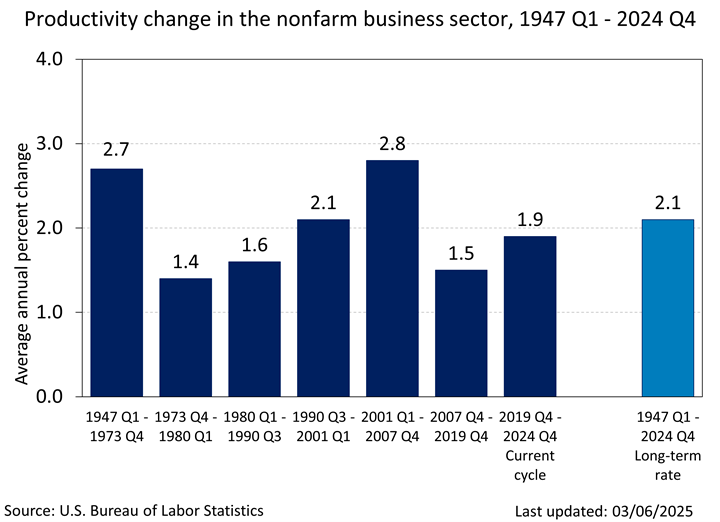
Even OpenAI’s Sam Altman, AI’s most public face, says he now doubts its job-killing potential. “I don’t think we’re going to have the kind of jobs apocalypse that some of the companies in our space advocate or talk about,” he said in May. As Massachusetts Institute of Technology economist David Autor noted: “A lot of people have noticed that the world is not changing as fast as they predicted.”
This has opened the public conversation to a less cataclysmic narrative of the evolution of the technology. The emerging new story not only puts more emphasis on the complexity of the relationship between automation and human work across history. It is also raising doubts about the very feasibility of the threatened AI transformation of the universe. The tech-heavy Nasdaq index, which had been propelled almost exclusively by the rise of AI-related stocks, has fallen about 8% since its peak in early June.
One strand of critique of the “AI-will-do-everything” story might be called the O-ring argument. It comes from the mid-flight explosion of the space shuttle Challenger 73 seconds into its flight on 28 January 1986. A lengthy investigation concluded that the demise of the multibillion dollar spaceship was caused by a rubber O-ring that didn’t work at low temperatures.
That cheap O-ring proved critical. The analogy suggests that as long as AI cannot perform every task perfectly, it will increase the value of the remaining tasks. Depending on which the AI takes over, it could increase the value of high skill workers who are relieved by AI of the low-end part of their job, or increase the opportunity of lower skilled workers by taking over the more expert tasks.
As one recent study noted: “despite strong substitution at the task level, overall employment effects are modest, as reduced demand in exposed occupations is offset by productivity-driven increases in labor demand at AI-adopting firms.”
Things could change. As Jed Kolko points out, research on the labor market impact of artificial intelligence is still in its infancy. There are almost four years to go in Amodei’s one-to-five year window. And maybe devastation hits in year six. According to the Federal Reserve, adoption of AI is expanding fast across businesses.
Moreover, Autor argues, AI is getting better. And its progress shows no sign that it will soon hit a ceiling. “Skepticism about the stochastic parrot is behind us,” he told me. The dystopian AI future – utopian, if you get to own and run the AI – is still on the cards.
“Insiders are as gung ho as ever,” noted Daron Acemoglu, the Nobel prize-winning economist. “They still believe artificial general intelligence is around the corner.” Indeed, Elon Musk has not budged from the dream that “AI+Robots will be able to do everything, resulting in universal high income. Work will be optional.”
One may recall the quip by Nobel prize-winning economist Robert Solow in the early years of the computer revolution: “You can see the computer age everywhere but in the productivity statistics.” It took another 10 years or so, as businesses reorganized around the new technology. But computers did eventually show up in the stats.
Clouds are nonetheless gathering on the AI horizon. It’s not just that AI may not end all human work. AI may not deliver on its promise of vast economic opportunity at a price that humanity is willing to pay.
The politics have decidedly soured on the project. Seven in 10 Americans oppose building AI datacenters in their area. While this has to do with their insatiable demand for energy, which drives up local electricity costs, AI’s unpopularity is no doubt related to the proposition that it will destroy society as we know it.
There are other bumps in the road. Despite its vast progress, big doubts remain on whether AI can do everything a modern economy needs. “Not everything is a computational problem,” notes Autor. AI is good at replicating language, but it cannot connect language to the reality around it. Despite its progress, it still makes plenty of critical mistakes.
And then there are the impossible economics. Even if AI could eventually solve all our problems, the solution looks expensive. How much of GDP are we willing to invest in AI datacenters, 20%? 30%? 40%? According to some estimates, that is where we are headed. The International Energy Agency estimates that power demand from datacenters will more than double by 2030 to about 945 terawatt-hours, more than the energy consumption of Japan.
The economics look more fragile considering how fast the investment in AI depreciates, as new models overtake those developed just a few months ago. Companies developing AI models “are never going to make money”, Acemoglu said. “They are losing hundreds of billions of dollars every year.”
One may discount Altman’s new modesty as a PR feint. Somebody may have told him that equating the AI revolution with mass joblessness was not smart politics. But misgivings about AI’s vaunted capabilities are more than a marketing twist. The grand, epochal promise may be in trouble. Maybe artificial intelligence can’t deliver at a price society is willing to pay.