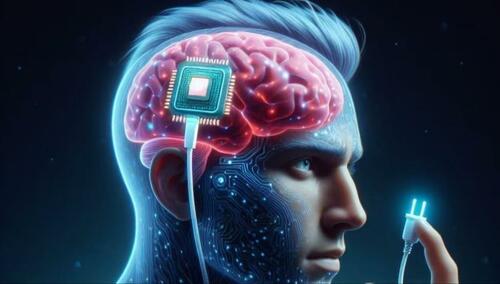
Elon Musk-led Neuralink Corp. implanted a brain chip into the head of a 29-year-old man with quadriplegia. The paralyzed millennial was recently seen using what he described as "The Force" to move a computer cursor around the screen to play Civilization VI with his mind. This is further evidence that the 'trans-humanism' movement - the merger of humans and machines - is accelerating development, fundamentally improving human lives, or at least that's what the billionaires are pitching.
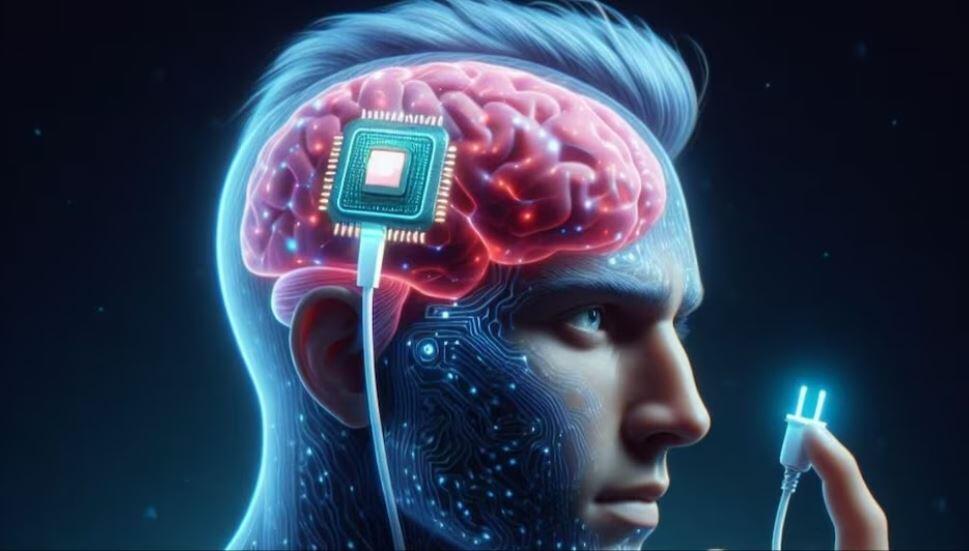
Editor Tim Hinchliffe of the tech blog The Sociable posted a creepy quote from a new report commissioned by the UK Defence Science and Technology Laboratory and conducted by RAND Europe and Frazer Nash Consulting that read:
"An 'internet of bodies' may also ultimately lead to an 'internet of brains', i.e. human brains connected to the internet to facilitate direct brain-to-brain communication and enable access to online data networks."
RAND describes a future of the Internet of Bodies ecosystem that may morph into the Internet of Brains, i.e., a network of brain-to-brain connectivity. This technology could find itself in the marketplace between 2035 and 2050.
"Trans-humanism implies the adoption of considerably advanced technologies by 2050, including brain-to-brain communication and genetic enhancement, and thus depends on resolving the various scientific and engineering barriers currently characterizing the field," the report said.
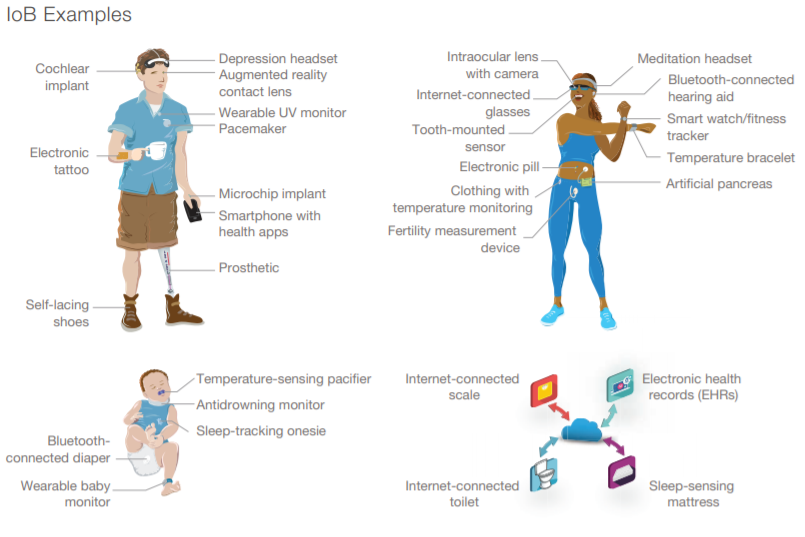
According to the report, the technological applications for this new brain network include:
-
Wearable devices and implants for tracking and analyzing physiological and environmental data (e.g. biochips and implantable sensors). These technologies aim to achieve real-time continuous monitoring of physiological data to understand human health conditions and performance.
-
Sensory augmentation technologies such as hearing and retinal implants designed to improve or augment sensory activities, particularly vision and hearing. Smart prosthetics are a related category, including exoskeletons, i.e. whole-body robotic suits that enhance end users' physical capabilities and improve their mobility, strength, endurance and other abilities.
-
Brain-computer or brain-brain interfaces that establish direct communications between human brains and/or computer devices.
The latest example of transhumanism is Neuralink's brain chip...
If and when humans become fully integrated with machines, is this just a march towards digital slavery?