Landmark cancer trial shows success against ‘undruggable’ cancer — raising hopes for future treatments
原始链接: https://www.nature.com/articles/d41586-026-01780-6

研究人员日益担忧全球 50 岁以下成年人癌症发病率上升的问题。虽然专家们提出了各种潜在原因,包括超加工食品、肥胖和农用化学品,但目前仍未找到明确的解释。 数据表明,这并非单一现象,而是几种截然不同的趋势。部分增长与临床定义的改变和检测方法的改进有关,例如胰腺癌。然而,其他癌症(尤其是结直肠癌、子宫癌和肝癌)的发病率确实出现了激增,尤其是在较年轻的“出生队列”中。 专家警告称,随着这一群体年龄增长,这种上升趋势可能预示着一场更广泛的公共卫生危机。尽管肥胖是多种癌症的已知风险因素,但临床医生指出,许多年轻患者身体健康,并不符合传统的风险特征。因此,研究人员正将重点转向识别可能对年轻一代产生独特影响的新型环境暴露和生物触发因素。了解这些因素至关重要,因为今天早发的诊断可能预示着这一代人在步入中老年时,癌症负担将大幅增加。
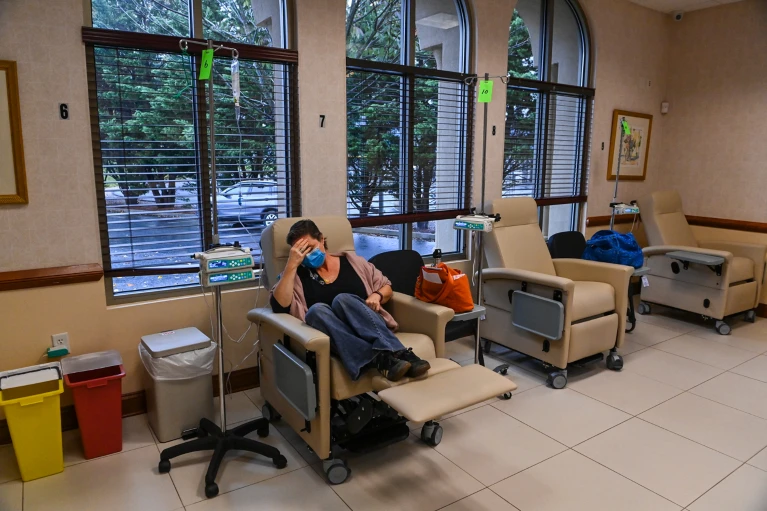
A woman receives chemotherapy.Credit: Ricky Carioti/The Washington Post/Getty
Researchers around the world are grappling with a vexing problem: why are so many young people developing cancers once considered the purview of old age?
The question was prominent at two of the world’s largest cancer meetings this year, and hypotheses abounded. Ultra-processed foods, obesity, microbial toxins and agricultural chemicals were all considered. But a clear answer remained elusive.
“Multiple cancers are increasing in incidence globally among individuals under the age of 50,” oncologist Kimmie Ng told the audience at the American Society of Clinical Oncology meeting in Chicago, Illinois, last week. “The vast majority are considered sporadic, with unknown cause.”
Worldwide, more than 9,000 cases of cancer are diagnosed in adults under the age of 50 each day, epidemiologist Hyuna Sung told the American Association for Cancer Research (AACR) annual meeting in San Diego, California, in April. But lumping these diagnoses together could obscure clues as to their cause, she cautioned. “Rising incidence of cancers among young adults does not reflect a single story,” said Sung, who works at the American Cancer Society in Atlanta, Georgia.
Clues to each story lie in the data. If diagnoses of a particular cancer increase suddenly and across all age groups, for example, the culprit might be a change in how that cancer is detected or classified. In the early 2010s, for example, the definition of pancreatic cancer was expanded to include pancreatic neuroendocrine tumours, which form in the pancreas’s insulin-making regions. Pancreatic cancer diagnoses had been slowly rising in the years before that change, but after it, the increase accelerated, including in people under the age of 50.
Putting early cancer detection to the test
The classification change probably does not fully explain the rise in early-onset pancreatic cancer, says Sung, but it probably accounts for much of it.
For other cancers, however, the increase in diagnoses in young people reflects a worrying change in the rate at which those cancers occur. Colorectal cancer is one of the clearest examples: in the United States, the incidence of advanced colorectal cancer has increased by about 3% each year since around 2010 in people between the ages of 20 and 49. In 2023, colorectal cancer became the leading cause of cancer death in this age group.
Uterine cancer and liver cancer diagnoses and deaths are rising in young women, says Sung. In these cancers, the surge in diagnoses appears to be a ‘birth cohort effect’, meaning that people born in a particular period are at higher risk than are those who are born before that period.
Even with these numbers, cancer deaths in people under the age of 50 remain a small percentage of overall cancer mortality. But the higher risk of certain cancers in this generation compared with previous ones could persist into older ages, when overall cancer risk becomes much higher. “This increasing trend of cancer among young adults really signals what comes next in 20 and 30 years, when they become middle-aged and elderly,” says Sung.
What happened to put this generation at risk? One culprit immediately stands out, says Andrew Chan, a gastroenterologist at the Massachusetts General Hospital in Boston. He points to exposure to an environment that encourages metabolic disease and obesity. “People are getting exposed to these factors at a younger age,” he says.
Colorectal cancer and uterine cancer, for example, have known links to obesity. But obesity itself does not fully account for the rise, said Ng, who is a founding director of the Young-Onset Colorectal Cancer Center at the Dana-Farber Cancer Institute in Boston. “Many of us in this room have taken care of young patients with cancer, and many of them are not obese,” she said at the clinical oncology conference. “It’s really important to start investigating novel exposures.”