The U.S. Army is quietly putting armed robots through their paces alongside real soldiers - and new footage suggests these machines could soon be a regular sight on tomorrow’s battlefields.

Fresh imagery dropped on Monday by the Defense Visual Information Distribution Service shows a Hunter Wolf unmanned ground vehicle rolling with the 101st Airborne Division during a full-on combat simulation at the Joint Readiness Training Center (JRTC) in Louisiana. The display amounted to a serious stress test in one of the Army’s roughest training environments - where ideas either prove they work or get ditched fast.
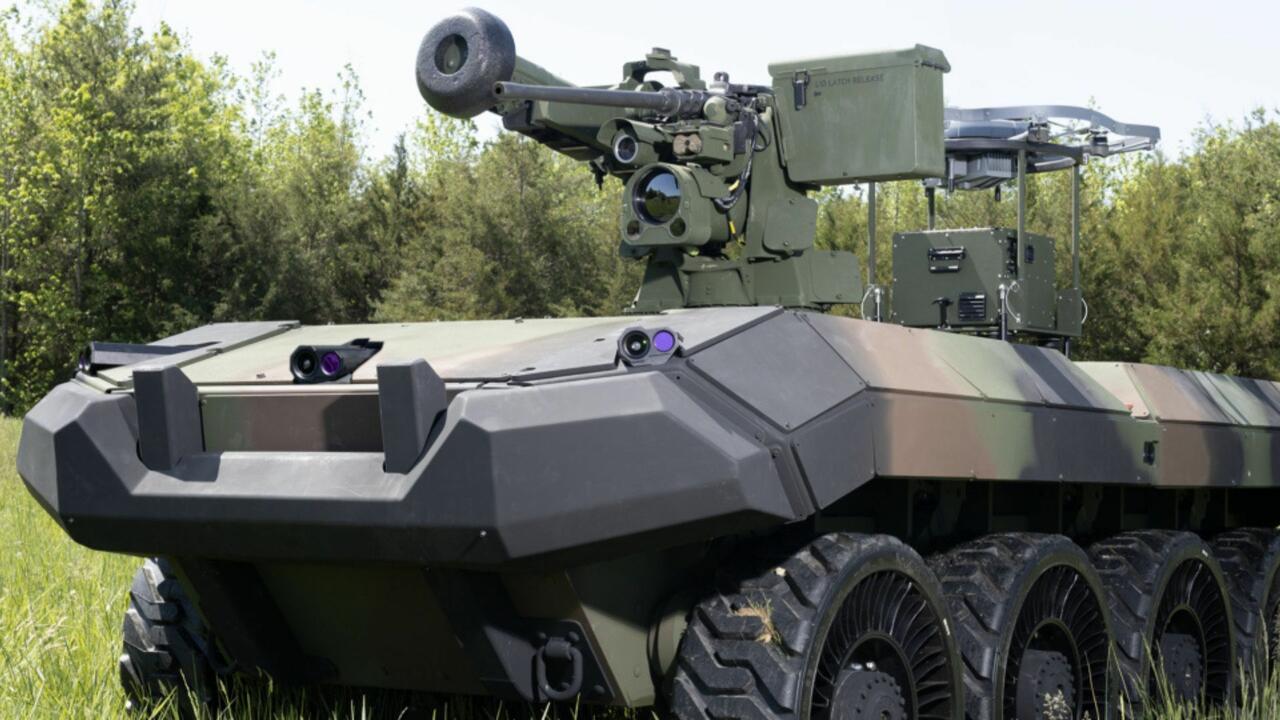
The Hunter Wolf’s appearance at JRTC marks a significant shift - as units aren’t just playing around with unmanned gear in isolated experiments anymore; they’re dropping it straight into realistic, chaotic scenarios. Elements of the 101st used the vehicle for logistics runs and security tasks throughout the exercise. Photos show it fitted with a remotely operated .50-caliber machine gun, which hints that the Army is testing it for more than just hauling supplies—it’s being eyed for actual tactical roles too.
The Hunter Wolf was originally picked up under the Army’s Small Multipurpose Equipment Transport program to take some of the crushing load off soldiers’ backs. But at Fort Polk, they ran it with a remote weapon station and EchoShield radar, turning it into a rolling set of eyes and teeth. The combo lets a unit push sensors and firepower forward without putting troops in the open. The robot can scout ahead, scan for threats, and even lay down fire while the soldiers stay under cover.
At the same time, it still hauls the basics - ammo, water, batteries, comms gear - so small units can stay mobile and supplied across wide, contested spaces. In today’s fights, logistics and security are blurring together anyway. A robot that can do both fits right in.
Defense analyst Teoman S. Nicanci (Army Recognition Group) points out that the real story here is the Army choosing a high-intensity training rotation like JRTC instead of a safe, staged test. It shows they’re serious about folding this tech into actual formations and missions, not just checking boxes.
For units like the 101st, where speed and mobility are everything, these unmanned platforms help keep that edge without burning out the troops or exposing them unnecessarily. Future battles are going to be packed with drones, artillery, and precision strikes—anything that cuts risk while keeping the pressure on is worth its weight.
Bottom line: the Hunter Wolf isn’t science fiction anymore. The Army is learning, right now, how to weave robots into the fight so soldiers can move faster, hit harder, and come home safer.
h/t Interesting Engineering
