Authored by T.J.Muscaro via The Epoch Times,
Artemis II’s four moon-bound astronauts are officially closer to the Moon than the Earth.

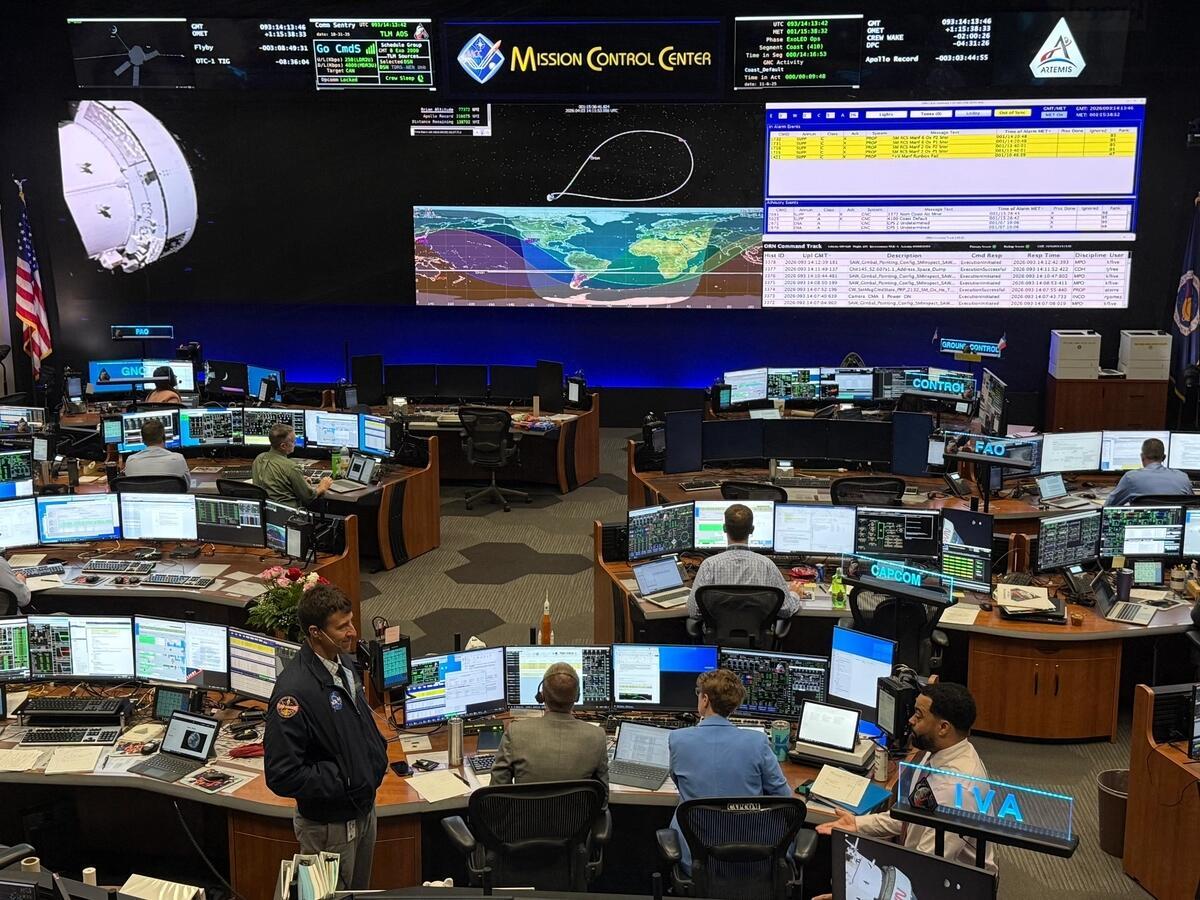
Mission Control confirmed the milestone to the crew at 10:59 p.m. CT on April 3, three days into their historic flight around the moon.
As of 11 p.m., NASA astronauts Reid Wiseman, Victor Glover, and Christina Koch, and Canadian Space Agency astronaut Jeremy Hansen and their Orion spacecraft Integrity were more than 136,000 miles away from the Earth.
This point was also far beyond the halfway point of the more than 252,000 miles they will ultimately reach from home.
Koch noted that the whole crew looked around at each other, acknowledging the milestone.
“We can see the moon out of the docking hatch right now,” she said. “It is a beautiful sight. We’re seeing more and more of the farside, and it’s just a thrill to be here.”
Though now closer to the moon, they still won’t enter its gravitational influence for more than a day.
According to mission leaders, everything is running smoothly, and a planned course-correction burn was canceled because the spacecraft remained on a precise heading.
After two days of critical checkouts, manual test flights, and a series of engine firings from the first crewed launch of the most powerful human-rated rocket NASA’s ever assembled to the first trans-lunar injection burn in more than 50 years, the crew and Mission Control have been able to settle into a much calmer pace.
The first pictures of Earth taken from Integrity were received and shared with the world on the morning of April 3. The crew spoke with members of the media and reflected on how the Earth looked from their vantage point. And upon waking on Day 3, they were able to talk to their families for the first time since the launch.
They then proceeded with the day’s objectives, which focused heavily on testing medical and emergency systems, including performing a CPR demonstration, evaluating the medical kit, and testing the Deep Space Network’s emergency communication.
They were also scheduled to take some pictures of the moon, rehearse cabin configurations in preparation for their upcoming lunar flyby, and find time to exercise during the day.
Each crew member is required to use the flywheel exercise machine—which is like a cross between a resistance cable and a rowing machine—for at least 30 minutes each day.

A view of Earth taken by NASA astronaut and Artemis II Commander Reid Wiseman from the Orion spacecraft's window after completing the translunar injection burn on April 2, 2026. NASA
Artemis II’s 10-day flight around the moon and back kicked off with a two-day gauntlet of checkouts, tests, and multiple engine burns. After launching from Kennedy Space Center aboard NASA’s Space Launch System, the crew was placed into an elongated elliptical orbit that carried them tens of thousands of miles above Earth.
The crew then began configuring the interior of their Orion crew capsule for flight before taking manual control of the spacecraft to test out its maneuverability.
Glover, who took the controls, noted that the Orion capsule performed wonderfully and flew better than the simulator.
After that, the crew settled into their first rest period, but had to wake up halfway through to perform an engine burn that kept them in a stable orbit and the correct course ahead of the trans-lunar injection burn that would come several hours later.
But, things have not gone completely perfect. There was an unexpected communications dropout, the toilet was not working properly, and they experienced several censor issues, which have persisted throughout the mission. A helium issue was also detected on the service module.
However, mission leaders reported that all problems had been overcome or mitigated through redundancies, as was the case with the helium. NASA leadership credited the enduring problem-solving to the way teams on the ground continue to work with the moon-bound crew in real time.
“It makes me very happy to see that, although we have some minor issues to deal with, the team operates very well, both on the ground—between our mission evaluation room, our flight control team—and with the crew,” Howard Hu, NASA’s Orion program manager, told The Epoch Times.
On Day 4, the crew of Artemis II will once again fly Integrity manually as they get closer to the moon. They will also attempt to take a “selfie” by utilizing a camera on the end of one of Integrity’s solar panels to take a picture of the spacecraft with the Earth in the background.