By Marty Stempniak of Radiology Business,
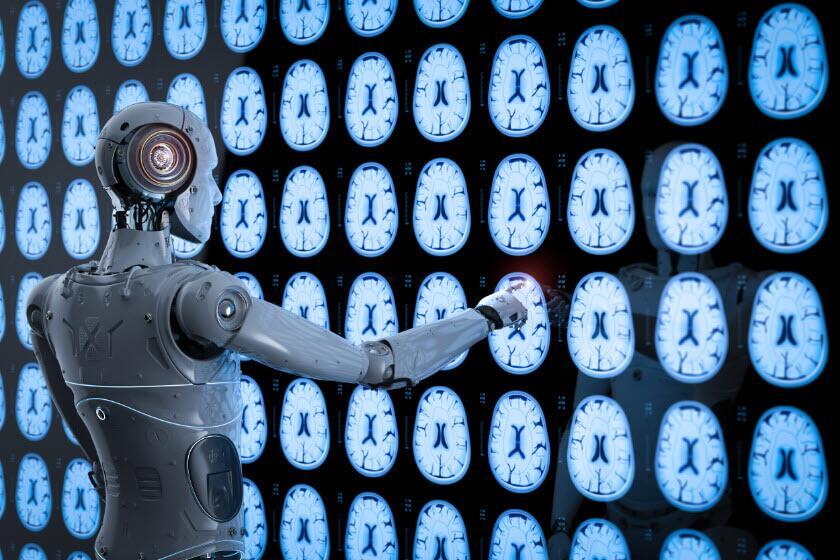
The chief executive of America’s largest public hospital system says he is prepared to start replacing radiologists with artificial intelligence in some circumstances, once the regulatory landscape catches up.

Mitchell H. Katz, MD, president and CEO of NYC Health + Hospitals, recently spoke during a panel discussion held by Crain’s New York Business. The trained internal medicine specialist noted how AI is increasingly being used to interpret mammograms and X-rays.
This presents an opportunity to save on how much hospitals spend on radiologists, who have become more costly amid rising demand for imaging, Crain’s reported Thursday.
“We could replace a great deal of radiologists with AI at this moment, if we are ready to do the regulatory challenge,” Katz said at the forum, held on March 25.
Katz—who has led the 11-hospital organization since 2018—said he sees great potential for AI to increase access to breast cancer screening. Hospitals could potentially produce “major savings” by letting the technology handle first reads, with radiologists then double-checking any abnormal screenings.
Fellow panelist David Lubarsky, MD, MBA, president and CEO of the Westchester Medical Center Health Network, said his system is already seeing great success in deploying such technology. The AI Westchester uses misses very few breast cancers and is “actually better than human beings,” he told the audience.
“For women who aren’t considered high risk, if the test comes back negative, it’s wrong only about 3 times out of 10,000,” Lubarsky said.
Katz asked fellow hospital CEOs if there is any reason why they shouldn’t be pushing for changes to New York state regulations, allowing AI to read images “without a radiologist,” Crain’s reported. In this scenario, rads could then provide second opinions, if AI flags any images as abnormal. Sandra Scott, MD, CEO of the One Brooklyn Health, a small hospital facing tight margins, agreed with this line of thinking, according to Crain’s.
“I mean, I’m in charge of a safety-net institution. It would be a game-changer,” Scott said about AI being used to replace rads.
The discussion comes after Dario Amodei, PhD, CEO of Anthropic, recently made similar statements about artificial intelligence replacing rads. In a podcast interview, he falsely stated that AI has taken over the specialty’s core function, allowing doctors to focus more on the human side of the job. Radiologists roundly criticized Amodei’s remarks. Mohammed Suhail, MD, a San Diego-based rad with North Coast Imaging, said the same about Katz’s comments on Monday.
“Undeniable proof that confidently uninformed hospital administrators are a danger to patients: easily duped by AI companies that are nowhere near capable of providing patient care,” Suhail told Radiology Business. “Any attempt to implement AI-only reads would immediately result in patient harm and death, and only someone with zero understanding of radiology would say something so naive. But in some sense, they’re correct: Hospitals are happy to cut costs even if it means patient harm, as long as it’s legal.”
* * *
