Authored by James Hickman via SchiffSovereign.com,
On March 11, 2011, a magnitude 9.0 earthquake struck off the coast of Japan and triggered a massive tsunami that slammed into the Fukushima Daiichi nuclear power plant. Three of the plant’s six reactors melted down, and it became the worst nuclear disaster since Chernobyl.
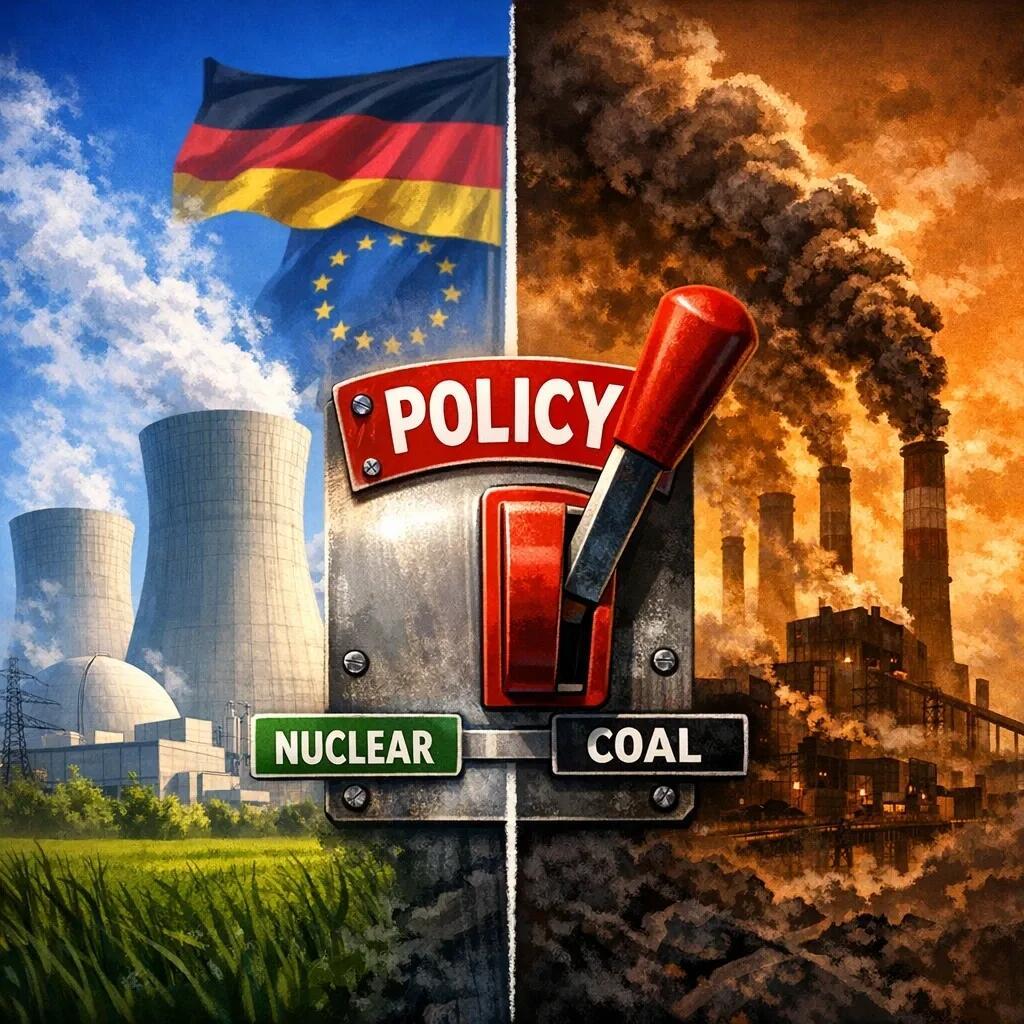
On the other side of the world, German Chancellor Angela Merkel panicked.
Her government had extended the operating lives of Germany’s 17 nuclear reactors just five months earlier. But, because of the earthquake in Japan, Merkel reversed course overnight and mothballed eight German reactors.
But Merkel’s decision wasn’t really about natural disasters. It was political.
Merkel was terrified of Germany’s Green Party— which was literally founded on anti-nuclear activism in 1980 and had been gaining ground. A critical regional election was just two weeks away, and Merkel was hoping that she might pull out a victory if she killed the reactors.
Her gambit didn’t work, and the Greens won anyway.

But at that point the fate of nuclear had already been set in motion. Within three months, the German government decided to phase out EVERY nuclear reactor in the country.
Bear in mind that Germany’s 17 reactors were generating over a third of the country’s electricity… with zero carbon emissions. That’s a pretty good thing for a country obsessed with climate change.
Yet Germany’s Green party had inexplicably spent decades campaigning to close them, i.e. to shutter the cleanest, most carbon-free source of baseload energy known to man.
Germany committed to replacing its nuclear plants with solar panels. Naturally this meant that, in a country where the sun barely shines, Germany became increasingly dependent on natural gas— most of which is piped in from Russia.
The true extent of this idiocy didn’t reveal itself until February 2022 when Russia invaded Ukraine: Germany joined Western sanctions against Russia. Russia retaliated by throttling gas supplies. And Germany had no fallback.
So Germany— the country that had lectured the entire world on carbon emissions— frantically restarted more than 20 coal-fired power plants. Then they imported 42 million metric tons of coal, including a surge from southern Africa. They even bulldozed the village of Lützerath to expand a lignite mine, dragging away protesters.
Germany also became a net electricity importer, buying power from France’s nuclear grid.
And gee what a surprise: German electricity prices are now the highest in the European Union. One obvious consequence is that Germany is no longer industrially competitive due to energy costs.
And that brings us to March 6, 2026.
Manuel Hagel, a 37-year-old political candidate from ex-Chancellor Merkel’s party, visited an elementary school.
National television cameras were rolling as Hagel attempted to explain the greenhouse effect to the children:
“Between the earth and the sun is the atmosphere. And as this gets increasingly thin, the sun gets hotter and hotter. And the reason for this is CO2 emissions and and and. And that is the greenhouse effect.”
Unfortunately his explanation is completely wrong. The greenhouse effect works because CO2 and other gases trap heat within the atmosphere; it has nothing to do with the atmosphere thinning or the sun getting hotter.
This is a guy who takes away stoves and gasoline powered vehicles in the name of reducing carbon emissions. Yet he doesn’t even understand the basics of his own ‘science’.
Zee German leadership humiliated themselves even more when, on March 10, European Commission President Ursula von der Leyen stood at the Nuclear Energy Summit in Paris and declared that Europe’s retreat from nuclear power had been “a strategic mistake.”
“In 1990 one-third of Europe’s electricity came from nuclear, today it is only close to 15%. This reduction in the share of nuclear was a choice, I believe that it was a strategic mistake for Europe to turn its back on a reliable, affordable source of low-emissions power.”
She’s right, of course. It was a mistake. An extraordinarily costly one.
This is hilariously ironic since Von der Leyen is German. She served in Merkel’s cabinet. She personally voted to phase out nuclear, and her own policies at the Commission have been to quietly phase out nuclear power.
Also this week, Germany’s current Chancellor (Friedrich Merz) weighed in on this nuclear blunder when he called the reactor phase-out “a mistake” and said, “I regret this.”
Great. Then fix it!
But they’re not going to do that. Unfortunately for Germany, said the Chancellor, “it is the way it is, and we are now concentrating on the energy policy we have.”
Unbelievable. So, in summary:
Germany (initially by Angela Merkel, then later by subsequent governments) destroyed their clean, cheap nuclear plants
They did this for idiotic political reasons
This led to a major energy crisis, which triggered an economic crisis
Nearly everyone in power now acknowledges this was a huge mistake
But they aren’t going to even bother trying to fix it
As we’ve written before, abundant cheap energy is one of the few forces that can reliably keep inflation in check. It fuels stronger growth, lowers prices, and makes life better for everyone.
The US, at least, is heading in the right direction for now, thanks to recent executive orders to reform nuclear licensing, fast-track small modular reactor designs, and create the first real momentum the US nuclear industry has seen in decades.
But the risk is obvious: one election, one change in administration, and a new set of politicians could gut all of that progress overnight — just like Merkel did in 2011.
Germany is a fifteen-year case study in how terrible policies can weaken a country.
And that’s exactly why it makes sense to have a Plan B.