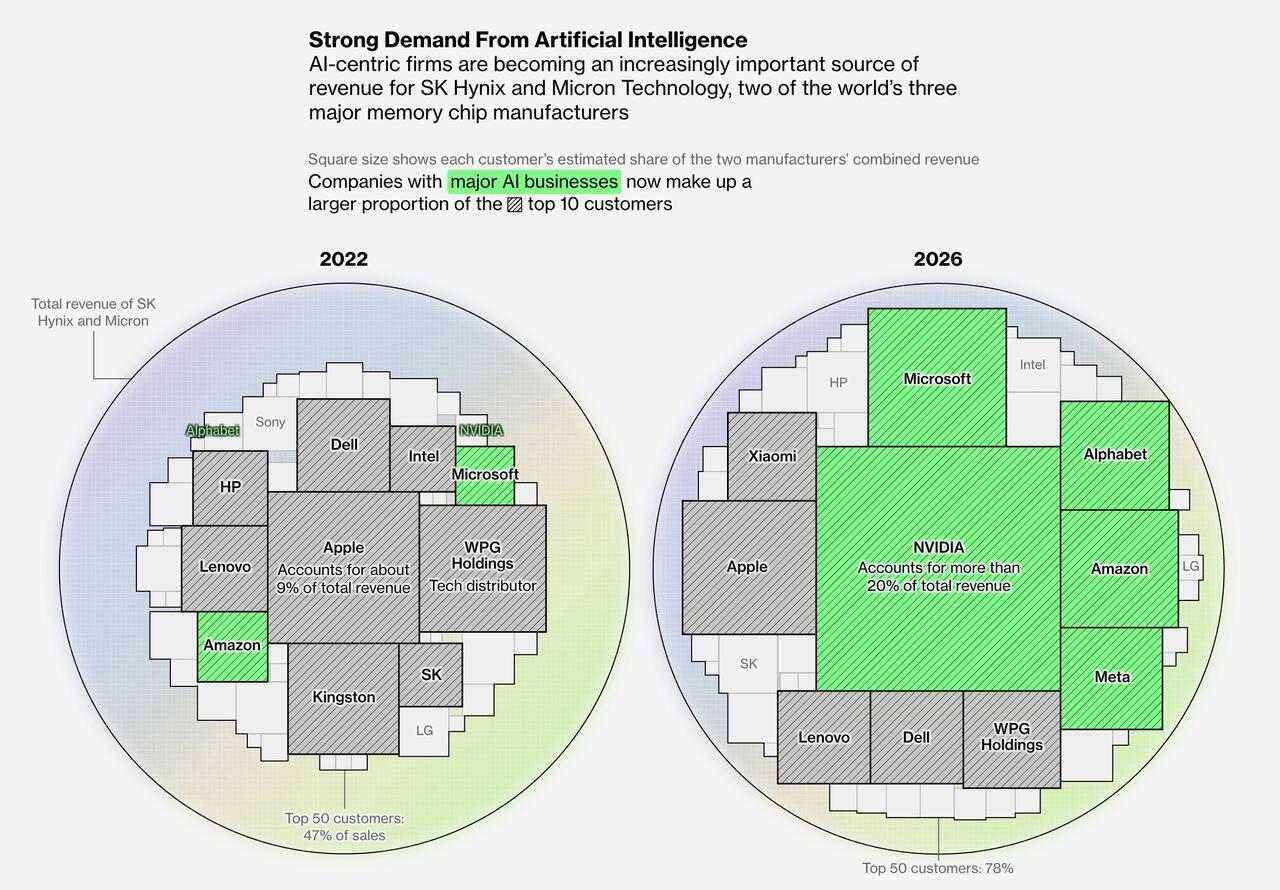
A global shortage of memory chips is emerging as demand for artificial intelligence infrastructure surges, according to a new report from Bloomberg.
Large technology companies are locking in supply by signing long-term agreements and paying higher prices to guarantee access to chips years in advance. Because these deals are more profitable, chip manufacturers are increasingly directing production toward AI customers. This shift has reduced the number of chips available for other products such as laptops, smartphones, gaming consoles, and cars, pushing prices sharply upward.
Memory chips play a critical role in modern computing because they store and deliver data to processors, which carry out calculations. Without sufficient memory, devices would struggle to run applications, load programs, or process data efficiently. Two types dominate the industry. DRAM functions as short-term working memory that computers and servers use to quickly access active data. NAND flash memory serves as long-term storage, holding files, photos, and software even when devices are powered off.

Bloomberg writes that Artificial intelligence systems require enormous amounts of memory, especially a newer design known as high-bandwidth memory (HBM). This technology stacks multiple layers of memory vertically and places them close to processors, allowing data to move much faster than with traditional designs. The speed is essential for AI models that must constantly move and process huge volumes of information.
The rapid expansion of AI data centers has dramatically increased demand for memory chips. Major technology firms are investing hundreds of billions of dollars to expand computing capacity, and AI servers require far more memory than traditional systems. As a result, data centers now account for a much larger share of global DRAM usage than they did just a few years ago, and that share is expected to keep growing.
With supply unable to keep pace, memory prices have climbed steeply. In some cases, DRAM spot prices have risen several hundred percent within a year, while NAND storage costs are also increasing. The impact is spreading across the electronics industry. Companies that build computers, phones, and gaming systems are facing higher manufacturing costs and tighter component supply. Some manufacturers have already raised prices or reduced the amount of memory included in certain devices to manage expenses.

Expanding production is not a quick solution. The memory chip industry is highly concentrated, with most output coming from companies such as Samsung Electronics, SK Hynix, and Micron Technology. Building new fabrication plants requires enormous investment and several years before meaningful output begins. Producing advanced chips like HBM is even more challenging because they involve stacking extremely thin layers of silicon with microscopic connections; even a small defect can ruin an entire unit.
Manufacturers are expanding cautiously because the memory business has historically been volatile, swinging between shortages and oversupply. Companies want to benefit from the AI boom without repeating past cycles that led to large financial losses when demand suddenly weakened. For the moment, firms building AI infrastructure are securing the components they need, while consumer electronics makers may have to cope with higher costs and limited supply until production eventually catches up with demand.