There are thousands of ships in the global oil tanker fleet, by some estimates nearly as many as 9000 (and that excludes sanctions vessels). Just a fraction of these are either waiting to enter the blockaded straits of hormuz, or to leave it.

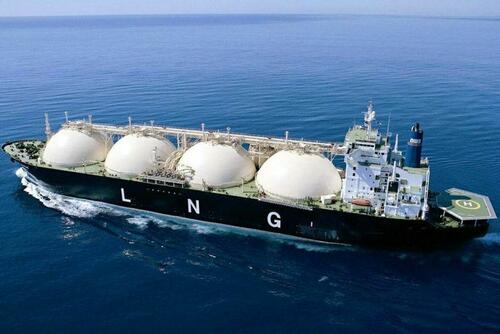
By contrast, the global LNG fleet is a tiny fraction, and now most of it is stuck inside the Persian Gulf.
According to the WSJ, at least 20 LNG carriers a bout half the available global fleet – are trapped in the Persian Gulf, with daily freight costs soaring as demand from Asia surges, according to ship brokers. Bloomberg lists the known LNG tankers which are currently transmitting their positions as follows:
- Al Rayyan
- Al Kharaitiyat
- Umm Al Amad
- Lebrethah
- Gaslog Skagen
- Sohar Lng
- Disha
- Al Daayen
- Mubaraz
- Al Sahla
- Rasheeda
- Patris
- Seapeak Bahrain
- Fuwairit
- Mihzem
- Mraikh
- Al Ghashamiya
Most are located just off the UAE coastline:

“The situation is dire and will have a lasting impact on the market, regardless of how quickly the conflict ends,” Kostas Karathanos, the chief operating officer of Athens-based Gaslog, which operates 34 gas carriers, told The Wall Street Journal.
Some 20% of global LNG exports come from Gulf countries. At the moment, however, only a handful of ships can get through the Strait of Hormuz, and production facilities like those operated by QatarEnergy have been attacked and have stopped production.
Ship brokers said the 20 ships trapped in the Persian Gulf make up nearly half of all LNG ships currently available for charter, with daily rates rising to more than $200,000 from less than $98,000 before the start of the Iran hostilities.
Energy traders expect LNG prices to rise by early next week, adding to this week’s 40% rise in Asia and Europe. “The effect on LNG shipping will outlast the conflict for a few months,” Karathanos said.
Amid the scramble to procure LNG, more shipments bound for Europe are diverting to Asia. At least nine cargoes initially headed to Europe have changed course to Asia since the start of the fighting, according to ship-tracking data compiled by Bloomberg, with the trend accelerating in recent days. A buffer of spare supply is quickly drying up, threatening more competition and higher prices for both regions.
Adding to the turmoil, LNG suppliers, including Shell Plc, are declaring force majeure for customers across Asia due to halted flows from the Middle East, according to people with knowledge of the matter. This illustrates a growing ripple effect throughout the global gas market.
With virtually no available tankers to transport cargoes, Asian buyers of LNG are preparing for the war in the Middle East to disrupt deliveries for months, Bloomberg reports.
Companies in Thailand are looking to buy LNG cargoes for delivery through May, according to traders with knowledge of the matter. Bangladesh bought shipments for April, and is considering procuring fuel for May onward as well, the traders said. Major buyers in Taiwan and South Korea are also preparing to purchase more supply for those two months.
The moves demonstrate that Asia’s importers aren’t relying on a swift resolution to the US-Israeli war against Iran, and that the outage in Qatar, which supplies 20% of the world’s LNG. is expected to be prolonged. The longer the plant is shuttered, the worse the supply shock as there’s no alternative route to export the fuel, nor spare capacity elsewhere to cover the lost output.
Companies need to make contingency plans to prepare for a 2 to 4 months disruption, Dai Jiaquan, chief economist at CNPC Economics and Technology Research Institute, said at a BloombergNEF Summit in Beijing on Thursday.
Qatar shut the Ras Laffan export facility last week after an Iranian drone strike, upending the market and sending the price of gas in Europe and Asia soaring. A number of companies, including Shell Plc, have declared force majeure on their shipments of Qatari LNG to customers in Asia.
At least nine LNG shipments bound for Europe have rerouted to Asia since the fighting began, according to ship-tracking data compiled by Bloomberg, after Asian buyers offered higher rates than their rivals in Europe.
Meanwhile, Taiwan - which desperately needs LNG for conversion into helium, a critical component to to make Taiwan Semi's chips - has started securing alternative LNG for May, cabinet spokesperson Michelle Lee said at a briefing in Taipei on Thursday. The island has fully secured supply for March and April, Lee added.
India, which sources about half its LNG from Qatar, has been scrambling to procure alternative shipments for immediate delivery, traders said. Gail India Ltd. was able to book an LNG cargo for March on Tuesday after a few failed attempts, while others are still looking, they said.