The barrage of negative private credit news, now that the $1.8 trillion bubble has burst, is coming hot and heavy.
Following last night's report that Cliffwater, a private credit interval fund which according to Rubric Capital "is the canary in the coal mine and will be the first domino in the bank run” was the latest fund to be hit with 7% in investor redemptions (and unlike BlackRock, interval funds can not gate investors), this morning the FT reported that JPMorgan has "clamped down on its lending to private credit groups, with bankers looking to cut risk as concerns mount over the credit quality of companies in their stables."
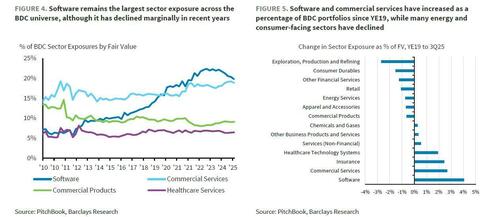
According to the report, the bank informed private credit lenders that it had marked down the value of certain loans in their portfolios, which serve as the collateral the funds use to borrow from the bank. The loans that have been devalued are to software companies, which are seen as particularly vulnerable to the onset of AI and which account for the bulk of private credit loans made in recent years.

The news, which hit just around 1am ET, hit S&P futures which until that point were trading at session highs.
JPMorgan's decision will limit how much money the bank lends to private credit groups against those loans going forward, a sign traditional Wall Street banks are becoming increasingly nervous about the $1.8 trillion industry that has grown rapidly as non-bank lenders became top creditors to higher-risk borrowers.
The move was to be expected: JPM CEO Jamie Dimon has expressed an increasingly negative view of the private credit space, and told investors at the bank’s leveraged finance conference last week that it was being more prudent in lending against software assets. Troy Rohrbaugh, co-chief executive of JPMorgan’s commercial and investment business, told analysts at a February company update that the bank was becoming more conservative compared to its peers on the risks in private credit.
“As the world gets more volatile . . . this outcome should be expected,” he said, adding: “I’m shocked that people are shocked.”
One person briefed on the bank’s decision said the valuation haircuts did not trigger margin calls at funds but were done to pre-emptively reduce the amount of credit available to the funds.
“They have been more difficult the past three months,” the head of one fund said of JPMorgan’s willingness to provide back leverage. He added JPMorgan rarely got “rattled and this is the first time we’ve had a little issue”.
As we explained at the start of February, investors are concerned AI will heavily disrupt enterprise software businesses, with scrutiny centred on the companies and their private capital financiers who poured hundreds of billions of dollars into the space. Publicly traded software stocks and debt have all plummeted this year. Private credit lenders, by contrast, tend to hold loans for the entire term and have not marked down their portfolios in lockstep. Private lenders have said enterprise software companies are still growing and expect their loans to continue performing, as investors backstop the borrowers.
The growth of the private credit industry has been supplemented by leverage from regulated banks, debt that is critical in bolstering returns above high-yield bond or leveraged loan funds. Banks including JPMorgan, Wells Fargo and Bank of America have all lent heavily to the industry, in part because regulations allow them to reserve less capital than if they were lending to borrowers directly.
As the FT notes, the fundraising ability of private credit firms, which took in $400BN from wealthy individuals and hundreds of billions more from institutions since the end of 2020, has allowed the funds to provide larger loans and compete directly with banks on multibillion-dollar leveraged buyouts.
That included financing mega takeovers when software businesses were fetching high valuations given work-from-home trends, including Thoma Bravo’s $6.4bn takeover of customer service software company Medallia, and Permira and Hellman & Friedman’s $10.2bn buyout of Zendesk.
The problem is that much of the new issuance was rubberstamped by captured rating agencies at artificially inflated ratings, and as the new reality of reduced cash flows emerges, some banks are repricing their loans - carried until now at par - sharply lower and in some cases all the way to zero.
Additionally, that debt is maturing in the coming years and much of it faces a dramatically different outlook.
JPMorgan is an outlier in the private credit financing business as it reserves the right to revalue assets at any time. Most other banks require triggers such as missed interest payments. Private credit funds can dispute the marks, according to a sample credit financing agreement reviewed by the FT. That could take months and require a third-party valuation. In the meantime, the bank’s determination remains.
The FT writes that the bank considers individual analysis and macroeconomic factors when valuing loans, according to another person familiar with the bank’s thinking. It also looks to public proxies, such as investment vehicles that buy private credit loans, and occasional private trades it can evaluate.
“The point is to do it as needed, not only when there’s a crisis,” one person said
The good news for now is that private credit executives said they had not seen other banks take a similar view as JPMorgan. However, once more sources of funding to the private credit industry read the apocalyptic report by Rubric Capital, (available here to pro subscribers) we are confident that will change.