Authored by Naveen Athrappully via The Epoch Times,
Oil is “beginning to flow” from Venezuela, with the United States and Venezuela engaging in a professional and dedicated manner on the issue, President Donald Trump said in a March 4 post on Truth Social.
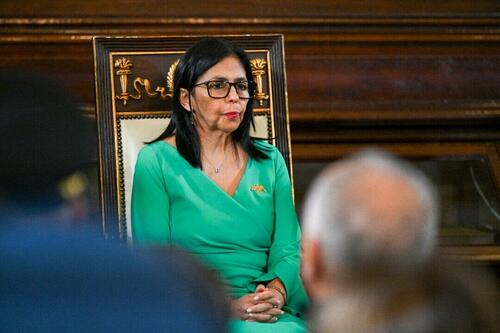
“Delcy Rodríguez, who is the President of Venezuela, is doing a great job, and working with U.S. Representatives very well,” Trump wrote.
Rodríguez became the leader of Venezuela in January after U.S. forces captured Venezuelan leader Nicolás Maduro on Jan. 3. Maduro is currently facing charges of narco-terrorism and drug trafficking in the United States.
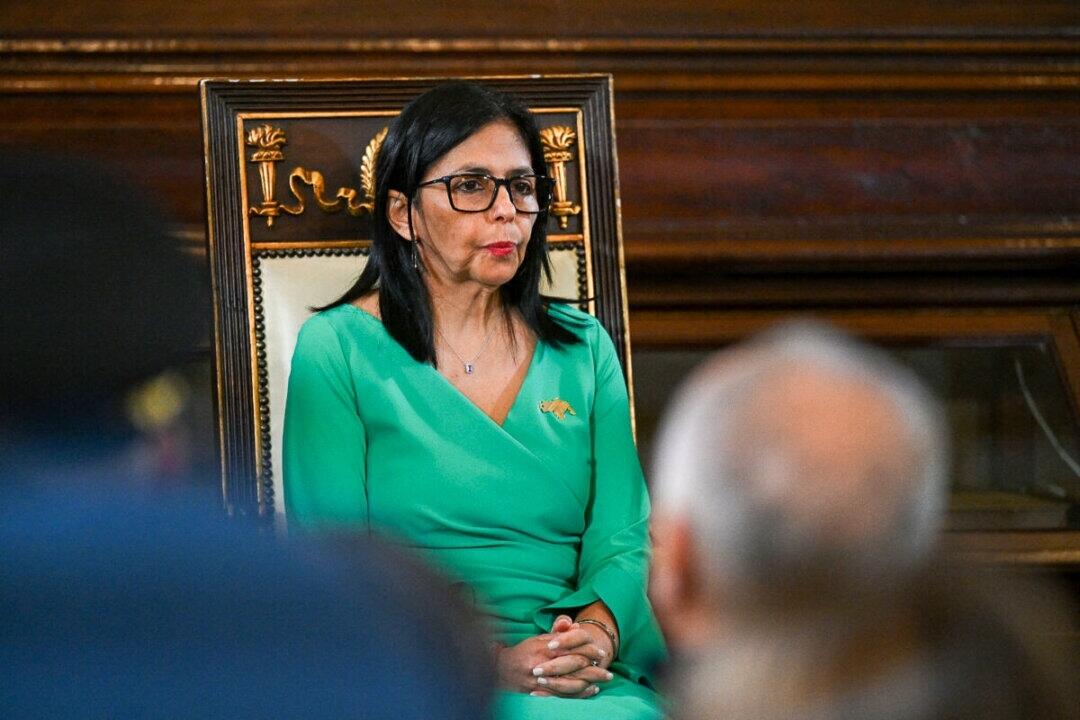
Replying to Trump’s post, Rodríguez said in a March 4 X post, “I thank President [Trump] for the kind willingness of his government to work together on an agenda that strengthens binational cooperation for the benefit of the peoples of the United States and Venezuela.”
After being named the interim president of Venezuela following Maduro’s capture, Rodríguez had condemned Washington’s action, calling for Maduro to be returned. She termed the U.S. military action a violation of international law. Trump then warned that Rodríguez could face consequences if she didn’t “do what’s right.” Rodríguez has become increasingly cooperative with Washington over the weeks.
On Feb. 10, the U.S. Treasury Department issued a general license that authorized the exploration, development, and production of oil and gas in Venezuela. The license allows U.S. citizens to carry out oil and gas-related transactions with the Venezuelan government, including the development of new oil and gas sites.
Prior to this decision, Venezuela’s state oil company PDVSA had to curtail production due to a U.S. blockade aimed at putting pressure on Maduro.
On Feb. 13, the Treasury Department’s Office of Foreign Assets Control issued a broad license that allowed major oil companies—BP, Chevron, Eni, Shell, and Repsol—to restart operations in the nation.
“Venezuela holds tremendous economic potential, but years of instability, corruption, and economic mismanagement have limited the nation’s growth and prosperity,” a Treasury spokesperson said in a statement to The Epoch Times.
“These general licenses invite American and other aligned companies to play a constructive role in supporting economic recovery and responsible investment.”
Venezuela possesses the largest commercially viable oil reserves in the world, estimated to be roughly 300 billion barrels, making up around a fifth of the global total.
However, taking advantage of these vast reserves will require bringing down the cost of production to make oil investments profitable.
Venezuela’s oil projects require a breakeven price of $64 per barrel, which is “among the highest in South America,” S&P Global said in a Feb. 13 report. “But reforms under U.S. oversight could lower costs to $45–50/b within the next few years,” the report states.
U.S. Energy Secretary Chris Wright visited Venezuela last month on a three-day trip, promising to improve the country’s energy production metrics and economy.
“This year, we can drive a dramatic increase in Venezuelan oil production, in Venezuelan natural gas production, in Venezuelan electricity production, to increase the job opportunities, the wages, and the quality of life for all of the Venezuelans across the country,” Wright said during a press briefing alongside Rodríguez.
“It will also enormously benefit the United States, and the Western Hemisphere, and the future partnership for all of us.”
In a Feb. 12 report, the International Energy Agency (IEA) said that Venezuelan crude oil output dropped by 210,000 barrels per day to 780,000 barrels per day in January from the previous month.
On the positive side, “its output is expected to rebound after Washington authorised a pathway for U.S.-incorporated companies—including U.S.‑based subsidiaries of international firms—to export Venezuelan oil,” the report said.
Meanwhile, oil prices have surged in recent days due to the ongoing Iran War. U.S. and Israeli forces launched coordinated strikes against Tehran on Feb. 28 under Operation Epic Fury.
On Feb. 27, Brent crude oil futures closed the day at $72.48 per barrel. Prices have jumped to $82.58 as of Thursday, 4:35 a.m. EST, an increase of almost 14 percent.
The U.S. national average price of regular gas was $3.25 on March 5, up from $2.98 a week ago, according to data from the American Automobile Association.
Speaking to reporters on March 2, Secretary of State Marco Rubio said the White House was preparing to unveil a strategy to bring down rising energy prices. He did not give more details on the initiatives.