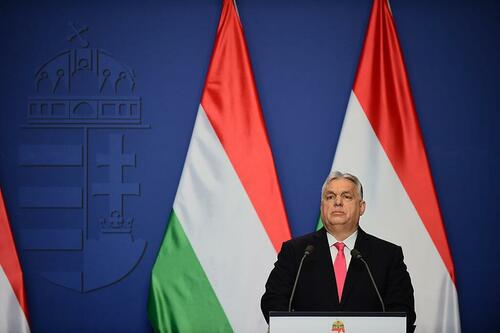
A Berlin appeals court has legally compelled Elon Musk’s social network X, formerly Twitter, to provide two German-based NGOs with access to public data regarding Hungary’s upcoming parliamentary elections, slated for April 12, 2026.

The judicial order was issued on Feb. 17 and came about due to a lawsuit launched by Democracy Reporting International (DRI) and supported by the Society for Civil Rights (GFF).
The legal action was initiated after X declined to provide the requested data in November 2025. As Remix News noted about this case in early this month:
“With campaigning intensifying ahead of Hungary’s April vote, the legal battle over platform data now adds another layer to an already charged political environment, one in which the question of who defines and defends democratic legitimacy remains deeply contested across Europe.”
DRI maintained that this data is essential for identifying “possible risks of disinformation or foreign interference” within the Hungarian electoral landscape.
Following X’s initial refusal, the Berlin high court intervened, ruling that the company must comply under the European Union’s Digital Services Act (DSA). The DSA grants verified researchers the legal right to extract data from major digital platforms to monitor systemic risks. Opponents of the DSA contend that these researchers aren organizations are adamantly opposed to
Notably, during the presidential elections in Romania, the government moved to invalidate the entire vote, claiming Russia interfered on TikTok in favor of Călin Georgescu, who was the favorite to win the presidency in all major polling.
Files published by the U.S. House Judiciary Committee found that the EU interfered in eight European elections, including Romania’s 2024 presidential election, when the courts annulled Călin Georgescu’s victory in the first round of voting.
The House Judiciary Committe further wrote that “new, nonpublic documents cast doubt on the allegations of Russian interference that led a Romanian court to undo the country’s 2024 presidential election results. TikTok told the European Commission that it found ‘no evidence’ of a coordinated a Russian campaign to boost winning candidate Calin Georgescu—the key allegation made by Romanian authorities—and informed authorities of this finding. Since then, public reporting has shown that the alleged Russian TikTok campaign was actually funded by another Romanian political party.”
Nevertheless, the annulment of a national election in Romania in complete violation of democratic norms has never been challenged by the EU. Even if it were proven that Russia ran a campaign on TikTok in favor of Georgescu, the question arises if this is grounds to annul an entire democratic election?
Notably, the U.S. government contends that the EU is actively participating in election interference in numerous EU member states.
The latest court decision from Berlin has drawn sharp rebukes from conservative European circles. The think tank MCC Brussels has raised alarms, suggesting that allowing EU-funded groups to scrutinize sensitive information regarding a national election creates “serious questions about democratic sovereignty.”
In a formal statement, the organization pointed out that DRI receives significant financial backing from both the European Commission and the German Government — both entities tightly tied to groups strictly opposed to Orbán winning reelection. The MCC Brussels warned that such data demands could be seen as “external pressure rather than as an exercise in transparency.”
This legal battle in Berlin unfolds amid an ongoing battle between EU institutions and the Hungarian government over national policies and rule of law. By applying the DSA in this manner, the German court has effectively broadened the reach of EU regulations, empowering Brussels-linked entities to monitor member states’ internal electoral processes.
On Feb. 4, MCC Brussels launched the Democracy Interference Observatory (DIO), an initiative dedicated to tracking and exposing what it describes as “interference by the European Union and actors linked to it in national elections within the bloc.”
“MCC Brussels today announces the launch of the Democracy Interference Observatory (DIO), a new initiative designed to expose, document, and analyse how the European Union and EU-linked actors shape national elections across Europe. MCC Brussels will be cooperating with other organisations dedicated to defence of free speech on the DIO project.”
The MCC Brussels indicates that it already sought documents from the European Commission regarding interference in the Romanian elections. Even as Berlin courts order X to provide information, the EU commission is refusing to provide “crucial documents” related to its use of DSA to interfere in national elections.
Already last year, MCC Brussels has sought access to EU Commission documents containing information on the Digital Services Act (DSA) proceedings related to the Romanian presidential elections. The Commission has denied access to these crucial documents though, with the explanation that the DSA overrides the EU’s own Transparency Regulation – a decision upheld by the EU Ombudsman on 19 December 2025.
Yet recent releases by the U.S. House Judiciary Committee, based on internal documents from major digital platforms, reveal extensive coordination between government authorities, technology companies, and external organizations to police and steer political speech online. These disclosures demonstrate that large-scale, institutionalized content governance affecting democratic debate is not speculative, but already operational.
As we see, political developments in Central and Eastern Europe point to the emergence of a recognizable operational pattern.
Following the Romanian elections, allegations of large-scale foreign interference were rapidly invoked to justify extraordinary regulatory measures, intensified platform enforcement, and expanded fact-checking operations. That same playbook is now beginning to appear in Hungary.
Hungarian opposition leader Péter Magyar has publicly adopted the Romanian framing, warning of foreign (specifically Russian) interference and calling for stronger EU-level responses. In parallel, his head of Cabinet, Márton Hajdu, has publicly argued for the application of the EU’s Digital Services Act (DSA) and AI Act in Hungary to counter online “disinformation.”
There are valid concerns of election interference in nearly every national election in Europe and beyond. However, before Romania, no election was annulled in such a dramatic fashion in the EU due to alleged interference, raising concerns that a future template could be applied to other EU member states that do not vote the desired EU-approved candidate into office.
Loading recommendations...