As news of Meta shutting down Horizon Worlds, its virtual reality social platform, started to spread, commentators rushed to declare VR technology dead. They are wrong.
Five years ago, the future looked promising for VR technology. Facebook CEO Mark Zuckerberg announced in October 2021 that the company would change its name to Meta and focus on building the metaverse, a global social virtual reality:
“Our hope is that within the next decade, the metaverse will reach a billion people, host hundreds of billions of dollars of digital commerce, and support jobs for millions of creators and developers.”
Meta reportedly poured close to $20 billion a year into VR research with very little return. These resources will likely now be redirected towards AI development. While Meta definitely led the way in VR R&D efforts, it was not the only major tech company investing heavily in the technology during the 2010s and early 2020s. Microsoft, Google, and Sony, among others, spent billions on VR projects that mostly failed to meet industry expectations.
AI is now the main focus of the tech industry, and it appears to be bigger than VR ever was. However, the final chapter on VR technology is yet to be written. The VR idea is deeply rooted in human psychology, philosophy, and culture; efforts to bring it to life with technology will persist.
The key psychological element of VR is immersion. It is a cognitive state achieved when a user’s awareness of his or her physical self, surroundings, circumstances, and sense of time is diminished or lost by being surrounded in an engrossing total experience. The user is deeply engaged, involved; his or her natural disbelief is suspended; he or she is present in the simulated environment and situation. This state shares many cognitive characteristics with dreaming while sleeping. When sleeping, the body enters a state of suppressed senses and lowered engagement with the physical environment; the unconscious mind provides stimulus, and we dream. Dreaming is the natural form of immersive virtual reality.
René Descartes, in Meditations on First Philosophy, considers a scenario in which he is unknowingly living in an artificial reality created by an evil demon. The demon controls Descartes’ perceived environment and body, luring him into adopting a false, yet comfortable, belief system. Descartes’ evil demon thought experiment is an extension of a fundamental philosophical argument that goes back to the great philosophers of the 4th century BCC. Plato, in Theaetetus, and Aristotle, in Metaphysics, wondered how, if dreamers are not aware that they are dreaming, can we ever be sure that we are in fact awake. Around the same time, halfway across the world, Chuang Tzu expressed the same idea in his words:
“Once, Chuang Tzu dreamed he was a butterfly, a butterfly flitting and fluttering about, happy with himself and doing as he pleased. He didn’t know that he was Chuang Tzu. Suddenly he woke up and there he was, solid and unmistakable Chuang Tzu. But he didn’t know if he was Chuang Tzu who had dreamt he was a butterfly, or a butterfly dreaming that he was Chuang Tzu…”
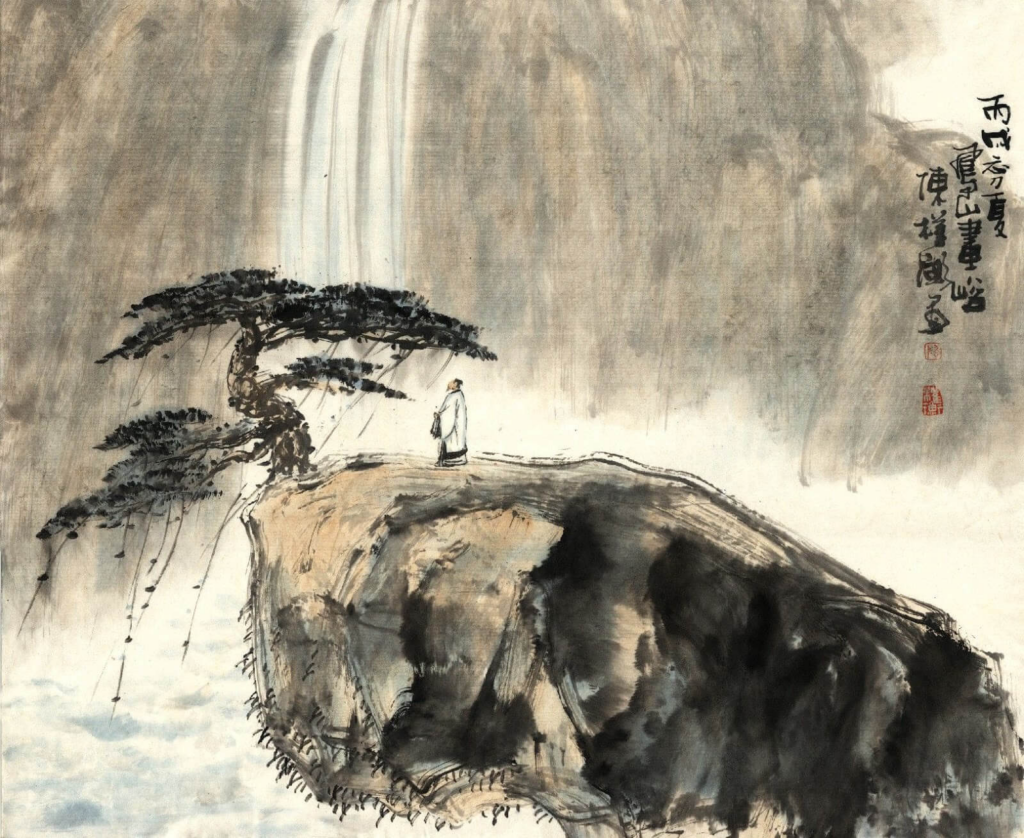

Influential philosophical ideas often find their way into popular culture; the idea of virtual reality is a strong example. Even when looking at early fantasy fiction, we can find portrayals of characters engrossed in elaborate dream realities. In Geoffrey Chaucer’s The Book of the Duchess, written in 1368, the main plot unfolds within the narrator’s dream. The main theme in the Spanish Golden Age playwright Pedro Calderón de la Barca’s La Vida es Sueño (Life is a Dream) from 1635 is the contrast between subjective and objective perceptions of reality. In both Lewis Carroll’s Alice’s Adventures in Wonderland from 1865, and L. Frank Baum’s The Wonderful Wizard of Oz from 1900, the story is eventually revealed to be set in a dream. In these and other works, the dream serves as a literary device which allows the writer to break out of the limitations of physical reality—and yet it is much more than that. The idea of a story set within a detailed intellectual reality has paved the way for virtual reality science fiction.
The advances in technology in the second half of the 20th century have given Descartes’ evil demon a public face; technology has become the facilitator of VR. Science fiction has begun portraying the extensive and often detrimental potential impact of technological VR on society and individuals. In one of the earliest examples, Ray Bradbury’s 1950 short story The Veldt, the child protagonists managed to reprogram a VR nursery to imprison and kill their parents. Stanislaw Lem’s short story Ijon Tichy’s Memories from 1960 explored the idea of a VR environment that lies within another VR environment. Philip K. Dick has explored VR in many of his works from the late 1950s to the 1980s. In 1987, the TV series Star Trek: The Next Generation featured an advanced VR facility called a holodeck, which allowed users to interact with realistically programmed characters in a perfectly believable artificial environment. The Lawnmower Man, a 1992 film, warned against the dangers of experimental VR technology. The 1999 Matrix movie franchise depicted a world where VR is used to enslave mankind. There are many 21st-century works featuring VR. Some examples include the films Vanilla Sky, Ready Player One, and the Tron franchise; as well as the TV shows Westworld, 3 Body Problem (adapted from the Liu Cixin novel), and Black Carbon (adapted from the Richard K. Morgan Takeshi Kovacs novels).
Meta’s Horizon Worlds struggled to attract a significant user base. Many found the Meta Quest VR headsets uncomfortable to wear, reporting neck fatigue, headaches, and glare issues. For many, the Meta VR experience was difficult to fit into daily life because it required setup, a spacious area to move around, and temporary separation from the real world. The software suffered from crashes and severe performance issues. Content was lacking. Other VR implementations, such as Microsoft’s HoloLens and Sony’s gaming PSVR, also faced serious technical problems and failed to achieve mainstream success.
Clearly, VR technology isn’t fully ready yet. However, the concept of VR remains compelling. VR is not some technological fad; it is technology that enables us to go beyond our physical limits and enter a dreamlike reality whenever we choose. It won’t be discarded. VR technology draws on ancient ideas, psychology, and culture. These form strong social foundations, creating demand and potential for the technology. In time, as the technological environment develops, VR will reach its full potential.
1,057 | 2 | Published: Mar. 25, 2026 | Last updated: Mar. 28, 2026 | Topics: Culture, Innovation, Markets
Try this week’s featured note:
-
AI technology is making the right to be forgotten obsolete, leaving us prisoners of our own pasts.